
Why low-cost flights still matter for corporate events
In corporate events, low-cost flights remain a widely used option. The reasons are well known: competitive fares, extensive coverage across European routes, and alignment with many corporate travel policies focused on cost control.
For events with flexible agendas, fragmented groups, or a higher tolerance for schedule variability, low-cost flights persist as a rational and, in many cases, effective solution.
Low-cost options respond to real needs within business travel management and remain a core tool for many organisations. The key question, however, is not whether they work in general, but how far they remain reliable as the event increases in complexity and the margin for error narrows.
Low-cost flights don’t lose their relevance, but their limitations become more evident when an event requires tight control, coordination, and precise timing.
The operational limits of low-cost flights in complex corporate events

When a corporate event becomes more complex (in terms of participant numbers, rigid timelines, or strategic value), low-cost flights reveal limitations that are not occasional but structural.
In recent years, there have been numerous cases – widely reported in both mainstream and industry media – of low-cost flights cancelled at the last minute, leaving passengers grounded with no immediate alternatives. This is particularly common on point-to-point routes or at secondary airports.
In these scenarios, the critical issue is not the cancellation itself, but the lack of an effective re-protection system for large groups. Low-cost carriers operate with highly optimised fleets, tight aircraft rotations and reduced operational margins. When a flight is cancelled, recovery options are often limited or incompatible with the time constraints of a corporate event.
The result is a domino effect: participants arriving late or not at all, groups split across different solutions, and event agendas that must be redesigned in real time. In these situations, the problem is not a single disruption, but the fragility of the model when subjected to operational stress.
At this point, the issue is no longer purely economic. Budget considerations may have driven the initial decision. But when disruption occurs, the real cost becomes lost time, a compromised participant experience, and the organisational effort required to contain the impact. The question then shifts from “how much did we save?” to “how strong is the travel model we chose?”.
What data shows about low-cost flights and air traffic: a system under pressure
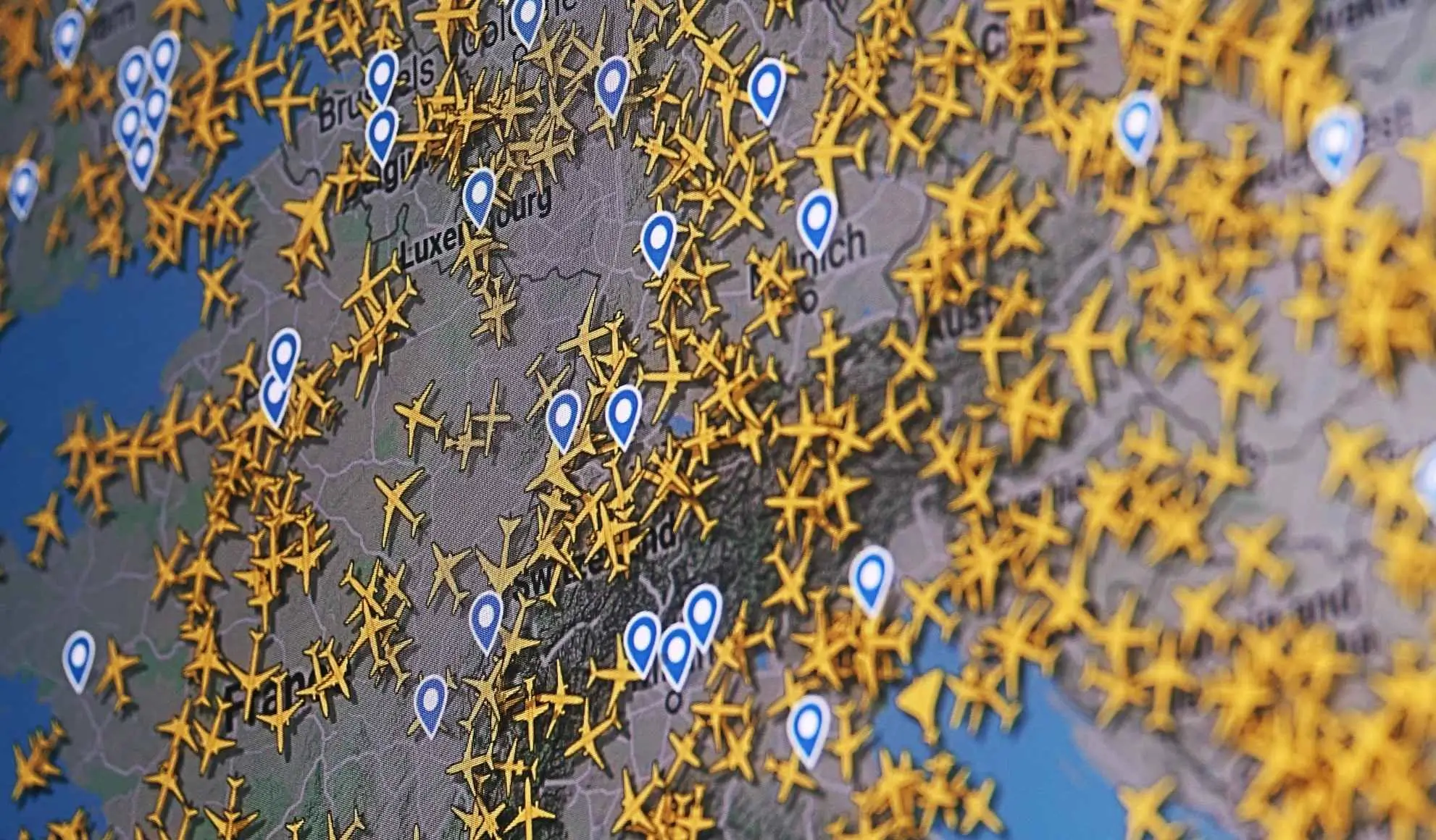
In recent years, data on European air transport has shown a clear trend: passenger traffic has returned to rapid growth, while operational capacity, airport slots and system-wide resources are struggling to keep pace.
According to air traffic and network operations analyses (Eurocontrol), this imbalance has a strong impact during peak periods and on point-to-point routes, which are also typical of the low-cost flights model.
The same analyses highlight that the increase in flight delays and cancellations is not an isolated phenomenon, but the result of a system under structural stress, where the ability to absorb disruptions becomes increasingly limited.
Delays and cancellations: recurring issues in European air traffic
During periods of high demand, data highlights several recurring critical issues:
- Increased flight delays: driven by airport congestion and pressure on air traffic management systems.
- Last-minute cancellations: particularly in the event of strikes, staff shortages or operational disruptions.
- Limited re-protection capacity: especially for large groups.
- Passenger fragmentation across multiple flights has a direct impact on event planning and coordination.
As confirmed by industry analyses and sector reporting, these situations are not isolated exceptions, but recurring events that emerge whenever the air transport system is under significant operational stress.
Why the low-cost flights model is more exposed to operational risk
The low-cost flight model is built on a high level of resource optimisation. This approach is efficient under normal operating conditions but becomes more fragile when the system comes under strain.
In particular:
- Very tight aircraft rotations reduce recovery margins.
- Maximised fleet utilisation limits the availability of replacement aircraft.
- The point-to-point model makes coordinated re-protection of large groups more complex.
As also highlighted by macro-level industry analyses published by IATA, the growth in air traffic demand is outpacing the system’s ability to adapt, increasing operational risk, especially during peak periods.
Low-cost flights and corporate events: when the system is under stress
| Risk factor | Evidence from industry data | Impact on corporate events |
|---|---|---|
| Growing air traffic | Passenger volumes increasing faster than capacity | Congestion and delays |
| Limited resources | Airport slots and staffing under pressure | Reduced flexibility |
| High seasonality | Summer peaks, holidays and major trade fairs | Cascading delays |
| Low cost model | Complex re-protection processes | Fragmented groups |
In leisure tourism, these disruptions may result in individual inconvenience. In corporate events, however, the real outlay is often organisational, reputational and strategic.
From data to risk: why budget alone is no longer enough
Data does not suggest that low-cost flights are inherently the wrong choice.
What it does show is that when the air transport system is under pressure, the likelihood of disruption increases and the ability to maintain control decreases.
This is where the evaluation criteria change: the focus is no longer solely on reducing flight costs, but on understanding how operational and reputational risks can affect the success of a corporate event, depending on its objectives.
Experience and belonging in corporate events: the flight as the first act

In corporate events, travel is never a neutral element.
Even when it is not explicitly designed as part of the experience, the flight represents the first tangible point of contact between the guest and the brand. It is at this stage that an initial perception of the event is formed, even before arrival at the venue.
In the MICE context, especially when an event has relational, commercial or positioning objectives, the way participants travel plays a key role in defining the overall value of the experience.
Corporate events and sense of belonging: why travel matters
Being invited to a corporate event means being selected.
Key clients, strategic partners, top performers or stakeholders are not simply attending a meeting, but taking part in an experience that communicates care, recognition and belonging.
The journey is the first moment when this message can be either reinforced or weakened.
- A fragmented and impersonal journey places the guest within an anonymous flow.
- A shared flight experience creates a sense of group from the very beginning.
- The perception of “being part of something” emerges even before the event itself.
In this sense, air travel becomes an extension of the brand, not just a logistical service.
Low-cost flights and charter flights: how event perception changes
The difference between low-cost flights and charter flights in corporate events is not limited to timing or operational flexibility. It also affects comfort, customisation options and the overall perception of the experience.
With low-cost flights:
- The travel experience is standardised, identical for all passengers.
- Comfort is limited to essential parameters.
- The brand is absent until arrival at the venue.
- Each participant experiences the journey individually, with no sense of connection.
This approach may be suitable for low-impact events from a relational perspective, but it delivers its limits when travel is meant to be an integral part of the experience.
With a tailored flight solution:
- Comfort becomes functional to the event’s objectives (timing, focus, well-being).
- The journey can be customised to reflect the brand, the tone of the event and the guest profile.
- The experience begins before reaching the destination.
- The group recognises itself as such from the very first stage of travel.
The ability to tailor the flight – from onboard welcome and time management to brand experience elements – creates continuity between travel and event, reinforcing the message behind the invitation.
This is not about luxury, but about alignment between the event’s objectives, the value of the guests and the experience being delivered.
In this sense, flight customisation and comfort become strategic levers, not optional extras.
The less visible risk: loss of symbolic value
When a corporate event is built around relationships, trust or brand positioning, one of the least visible risks is the loss of symbolic value.
An inconsistent travel experience can create a disconnect between the message a company intends to convey and what guests perceive.
In this case, the risk is not operational, but reputational:
- The event starts with a weak experience.
- The sense of exclusivity is diluted.
- The brand misses an opportunity to stand out.
This is precisely where the choice between low-cost flights and charter flights stops being a matter of price and becomes a strategic decision.
When to choose charter flights or low-cost flights: a risk-based decision

In 2026, the choice between low-cost flights and charter flights can no longer be seen as a rigid either–or alternative.
There is no general shift toward charter flights, nor a replacement of low-cost options within corporate travel policies. What is changing is the evaluation criterion behind the decision.
Charter flights come as a strategic option when operational and reputational risk exceeds a certain threshold: events with tight time windows, delegations that must arrive together, programmes that cannot tolerate delays, or contexts where the overall experience is an integral part of the event’s value.
In these scenarios, the key question is no longer “how much does the flight cost?” but how much risk the organisation is willing to assume, and at what price.
This applies precisely to corporate events where travel helps shape the perceived value of the invitation and the guests’ sense of belonging. This is an aspect we have explored in depth by analysing the role of flight customisation as a brand experience lever in corporate events
From cost to risk: how flight selection is changing in corporate events

Today, the real shift is not in the opposition between low-cost flights and charter flights, but in how that choice is made within a broader strategic framework.
In corporate events, air travel is no longer a simple cost item, but a strategic decision that affects operational continuity, experience perception and the overall value of the event.
Distinguishing the context, understanding the variables and assessing risk – operational, reputational and symbolic – becomes the first step towards truly informed decision-making.
It is this ability to interpret complexity, rather than the choice of flight type alone, that now makes the difference.
There is no one-size-fits-all solution for every event, but a coherent choice for each specific context. Evaluating risk before price is now the true differentiating factor in planning travel for corporate events.
Flyness supports companies and MICE agencies during the analysis and decision-making phase, transforming air travel into a strategic lever that ensures event continuity.
Talk to a Flyness consultant to explore the best solution for your next corporate event.