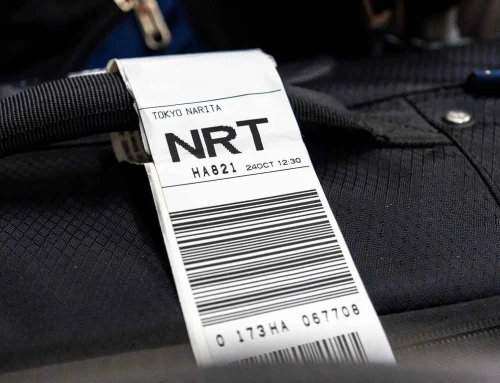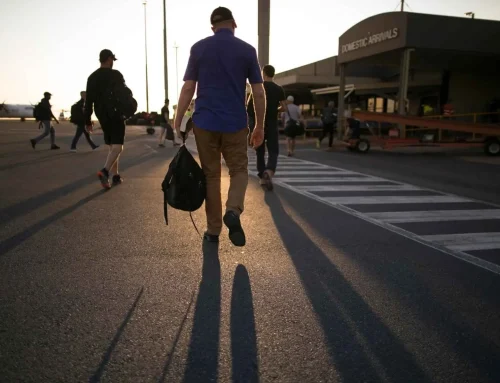
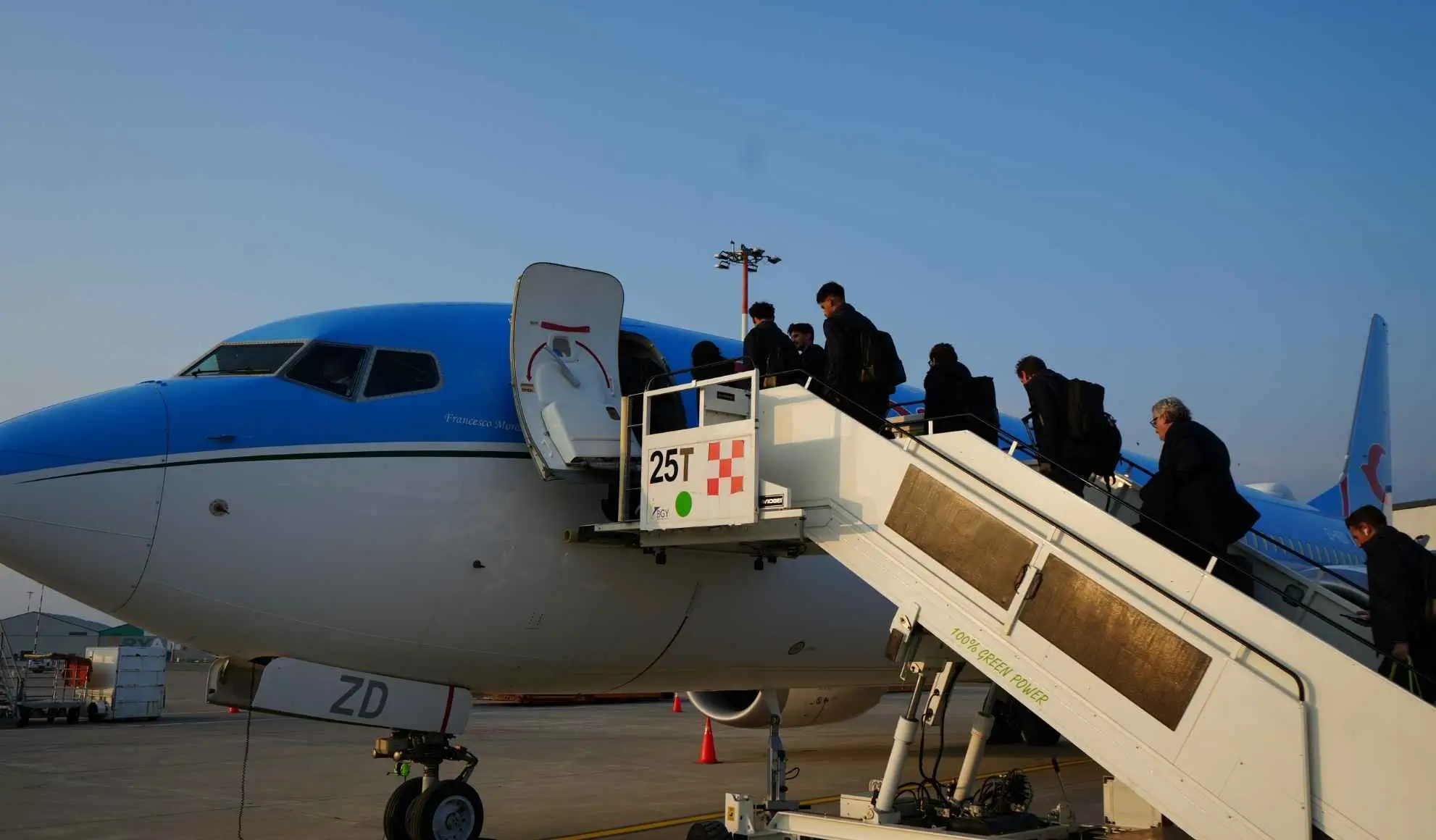
In professional football, travel makes the team visible, observed and accessible.
Airports, waiting areas, boarding, and arrivals all involve people, information, and internal dynamics that require control. Security, privacy, and brand protection are essential aspects of travel management.
Charter flights provide comfort and flexibility, secure confidentiality and privacy, by offering controlled environments and limited exposure during sensitive travel stages.
Sports team travel and visibility: a delicate balance

During a trip, the team moves through environments that are, by nature, open and shared.
Crowded terminals, security checks, gates and common areas are designed to manage large volumes of passengers, not to ensure privacy for a professional sports team.
In these conditions, exposure is not an exception; it is part of the environment.
Only a few elements are enough to turn an informal moment into a potentially critical situation:
- Unexpected presence of fans
- Information leaks attracting the media and photographers
- Unplanned interactions
- Poorly managed or uncoordinated movements.
A photo at the gate, a movement observed out of context, or a team’s presence revealed earlier than expected are all ordinary airport situations, but potentially delicate for a Club that needs to protect team focus and its public image.
Risks in sports team travel: where they arise

Critical aspects go beyond the scheduled flight itself. Risks tend to concentrate during transition phases, when the team moves through environments that are less controllable.
Airport areas and open passenger flows
Airports are high-density environments with shared access points. Even with precise planning, full control of passenger flows is not always guaranteed.
Accessibility makes every movement observable and, in some cases, predictable. This applies to most traditional airport environments, where exposure levels remain naturally higher.
When operations take place through private or dedicated terminals, the level of control changes significantly: access is restricted, passenger flows are reduced, timelines are shortened, and operations occur in a more protected environment. In these conditions, travel unfolds with greater operational continuity and less disruption.
Sensitive information and data
Sports team travel involves sharing operational information, much of which requires particular attention.
This includes, for example:
- Full passenger lists
- Passport numbers or identity document details
- Personal data of athletes and staff
- Information about schedules, movements and operational planning.
When multiple stakeholders are involved (Clubs, carriers, airport handlers and service providers), the risk of information dispersion increases.
For this reason, data management during team travel requires:
- Controlled information sharing
- Secure communication channels
- Access limited to relevant stakeholders
- Consistency between planning and execution.
An unstructured information flow can create misalignment, but also unnecessary exposure at a much more sensitive level: confidentiality and the protection of individuals.
Club image and operational context
A Club’s image is constantly under scrutiny: during official events, on the field, as well as in informal moments, seemingly marginal contexts and operational details.
Even a single episode can blur the line between operations and exposure. During a team trip, for example, a crew member – while maintaining a professional approach – may be influenced by an athlete’s notoriety and request an autograph during a sensitive moment such as disembarkation.
The gesture itself is not the issue. What matters is what it represents: even in structured environments, the level of attention must remain high.
For professional teams, confidentiality and control depend not only on procedures but also on the operational culture of everyone involved.
Sports team travel security: levels of control throughout the journey

Each stage of team travel presents a different level of control and, consequently, a different level of exposure.
| Phase | Operational context | Level of control | Level of exposure |
|---|---|---|---|
| Airport | shared environments | limited | high exposure |
| Boarding | filtered access | medium | selective exposure |
| Charter flight | private environments | high | operational control |
This distinction is useful because it allows team travel to be viewed more realistically: not all phases are the same, and not all offer the same level of protection.
In this context, the value of a charter flight also lies in the ability to increase control precisely during the stages where teams are typically more exposed.
Charter flights and football teams: managing flows and confidentiality
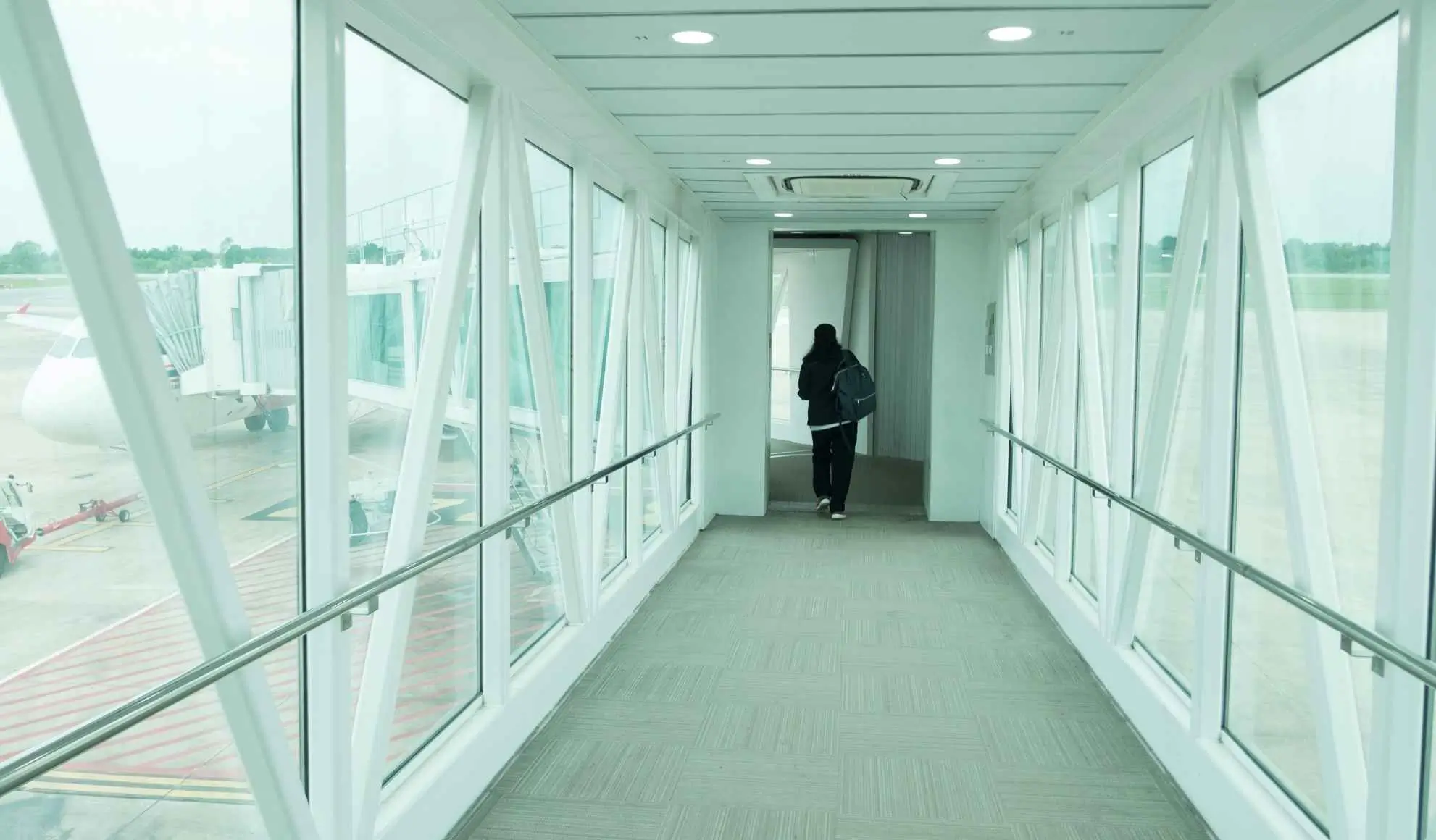
The use of charter flights for football teams takes concrete action during the most sensitive stages of team travel.
This is achieved through:
- Dedicated terminals
- Separate access points
- Planned scheduling
- Coordinated flow management
This approach helps reduce exposure during transition phases such as airport arrival, boarding and disembarkation. These are the moments when teams are more likely to lose operational continuity or move through environments that are not fully controllable.
The difference becomes evident when movements are structured, operations remain smooth, the team travels more discreetly, and the entire journey maintains consistency through every stage.
For a broader perspective on how charter flights are managed for professional teams, you can also read the complete guide on planning sports team travel by air.
Privacy and security as part of operational management

In sports team travel, privacy and security are not separate from logistics;they are part of it.
Managing privacy means:
- Coordinating information effectively
- Aligning all stakeholders involved
- Avoiding information leaks during sensitive stages
- Maintaining consistency between planning and execution
In high-visibility environments, even small misalignments can have a greater impact than expected. When a team is going through a delicate phase of the season or is under strong media pressure, every detail matters more.
Journalists or photographers may approach athletes, speculation may arise around a behaviour, or an unexpected interaction may disrupt team balance at a time when focus and stability should be the priority.
For this reason, security, privacy and the protection of the Club’s image should be considered as part of a single operational framework.
Brand protection in sports: why team travel matters

In professional football, a Club’s reputation is a strategic asset. It is shaped not only by sporting results, but also by how the team moves, communicates and presents itself in every operational context, including travel.
Today, sports organisations increasingly adopt media exposure management strategies to control visibility and prevent potentially critical situations. Informal moments, such as movements and travel phases, are all part of this balance.
Images taken by passengers in transit, media or fans’ unexpected presence do not necessarily represent an operational issue, but they can generate uncontrolled external narratives, influence the environment around the team or increase media pressure during already sensitive moments of the season.
For this reason, travel management should also consider the Club’s image protection, the safeguarding of athletes and the ability to ensure operational continuity in high-visibility environments.
Security, privacy and organisation are elements of sports brand protection. Tools to safeguard team movements and the Club’s value.
How to manage security and privacy in sports team travel

Effective management relies on several practical elements:
- Early planning of airport access
- Selection of airports and terminals appropriate to the level of exposure
- Confidential handling of operational information
- Coordination among all stakeholders involved
- Operational supervision during the most sensitive stages of the journey (Flight Rider)
This process requires method, experience and the ability to read the operational context. Planning travel alone is not enough: maintaining control, operational flow, and discretion across the entire travel chain is essential.
In sports team travel, maintaining control means protecting people, data and brand image to reduce operational friction and risks when the team needs to stay focused on performance.
Flyness supports Clubs and sports organisations in managing charter flights by integrating every operation into a coordinated, structured system aligned with the needs of professional football.
Contact us for more information.