SAF in private jets and charter flights
In 2026, Sustainable Aviation Fuel (SAF) is a central topic in the aviation industry. Interest in alternative fuels is driven by European regulations such as ReFuelEU Aviation, corporate ESG targets, increased demand for responsible flights for corporate events and MICE travel, and the need to reduce CO₂ emissions from private flights.
But what is the status of sustainable aviation fuel?
How widely available is it? How much does it cost?
And above all: what can a company do when SAF is not accessible, which is still the case for most charter flights and private jets?
This article not only provides insights into current developments but also outlines practical ESG actions that companies can adopt when SAF is unavailable, setting clear expectations for actionable content.
What is Sustainable Aviation Fuel (SAF) and why does it matter?

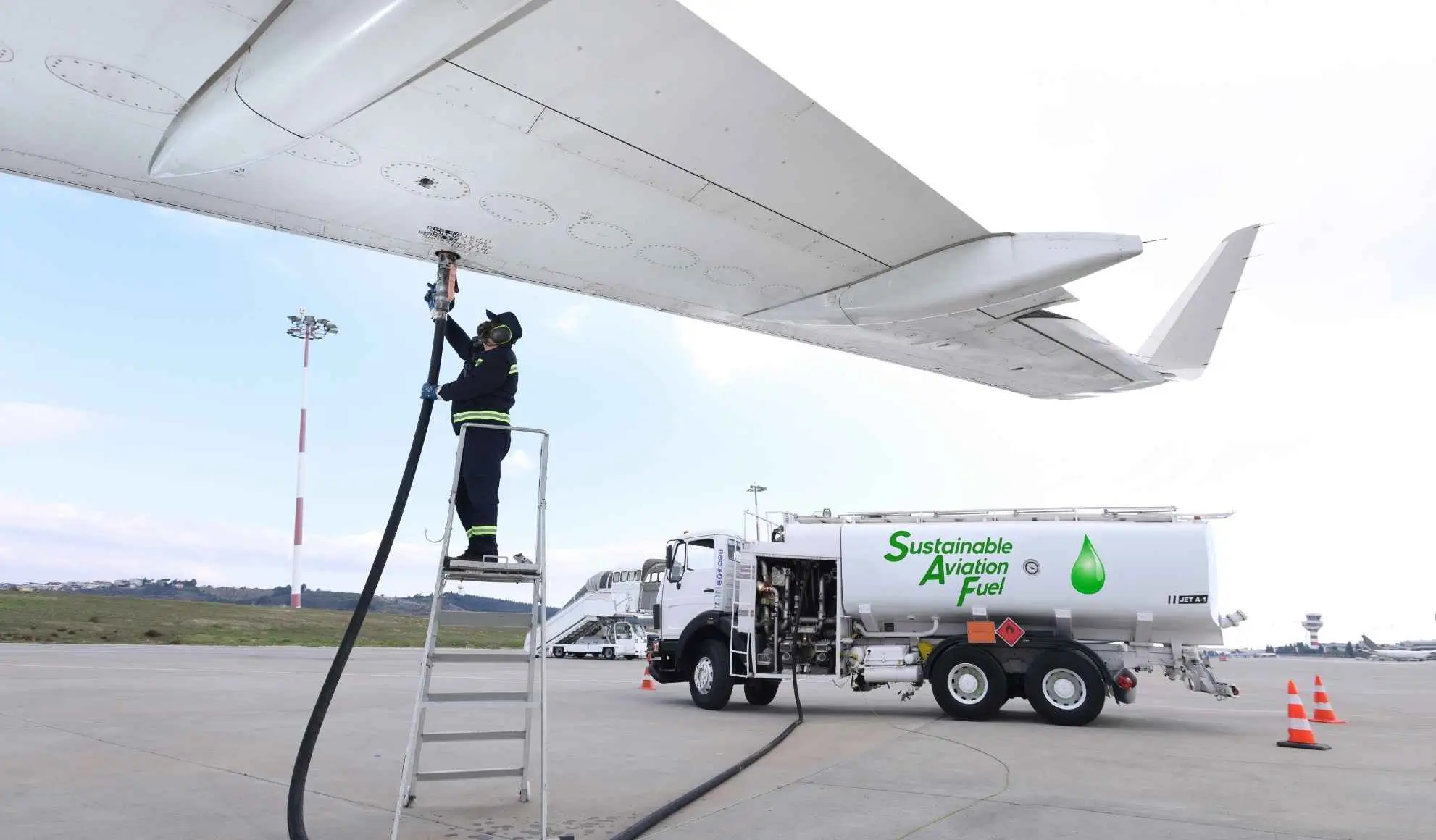
SAF (Sustainable Aviation Fuel) is an aircraft fuel produced from renewable feedstocks such as:
- Used cooking oils and vegetable fats (HEFA).
- Agricultural and forestry residues.
- Municipal waste converted into fuel.
- Synthetic fuels produced with renewable energy (e-fuels).
Its purpose is to significantly reduce lifecycle emissions by 60–80% compared to traditional Jet A1 (the standard fossil-based aviation fuel).
SAF vs Jet A1 – Key differences
| Aspect | Jet A1 | SAF |
|---|---|---|
| Origin | Fossil-based fuel | Biomass, waste, e-fuels |
| Lifecycle emissions | High | -60% / -80% |
| Compatibility | Fully compatible | Fully compatible (as a blend up to 50%) |
| Availability | High | Very limited |
| Cost | Standard | 2–4 times higher |
The main advantage of SAF is that it does not require any technical modifications to aircraft or engines.
What it does require is an airport infrastructure capable of supplying the needed blend (the approved mixture of SAF and conventional fuel).
ReFuelEU Aviation: what the European regulation requires

From 1 January 2025, the ReFuelEU Aviation regulation requires European fuel suppliers to distribute a minimum share of SAF:
- 2% from 2025
- 6% by 2030
- 70% by 2050
This requirement does not apply to individual customers.
It obliges airports and airlines to adapt their fuel supply systems.
Who decides which fuel is used for the flight?
Not the client. Not the broker.
The decision lies exclusively with the AOC (Approved Operator Certificate), the operator that performs the flight.
A broker can check availability and propose ESG-aligned options, but cannot mandate the use of SAF.
The real availability of SAF in 2026

In 2026, the availability of Sustainable Aviation Fuel remains extremely limited: supply is scarce and concentrated at only a few airports.
Even though the ReFuelEU Aviation regulation has introduced blending requirements, today’s production levels are insufficient to meet the growing demand from commercial airlines, business aviation, and charter operations.
This scarcity is driven by several factors: low production volumes, high costs, priority allocation to major airlines, and uneven airport infrastructure. As a result, only a few airports – such as Amsterdam, Copenhagen, Oslo, London, Los Angeles and San Francisco – offer a consistent supply of SAF (while at most European airports the presence of sustainable fuel is still sporadic).
- Insufficient production compared to demand: only 0.2% of the aviation fuel used in Europe is SAF.
- Priority for major airlines: large commercial carriers absorb almost all the available supply.
- High costs: the significantly higher price limits its use on less structured routes.
- Limited infrastructure: only a handful of airports provide SAF regularly, including Amsterdam, Copenhagen, Oslo, London, Los Angeles, San Francisco.
For business aviation and charter flights, this means SAF availability is often not guaranteed.
How much does SAF cost? A clear breakdown of 2026 prices

SAF is up to four times more expensive than traditional fuel.
For this reason, it may appear in a quotation under labels such as:
- SAF surcharge
- Sustainable fuel supplement
- Cost per tonne of SAF purchased
To better understand the economic impact of SAF on the total flight cost, a simplified example can be helpful.
While the actual figures vary depending on aircraft type, departure airport and the local availability of sustainable fuel, the principle remains the same: SAF costs significantly more than traditional Jet A1 (the traditional aviation fuel), and results in a proportional increase in the final flight price.
Indicative example:
- Traditional fuel → baseline 1
- SAF → 2.5 to 4 times higher
On an average charter flight, the financial impact may range between:
- +8% – minimum blend
- +25% – higher blend or SAF Book & Claim (a certification system that assigns the environmental benefits of SAF purchased elsewhere when it is not available at the departure airport).
The price also varies according to the stopover and the operator’s contracts.
To explore how the price of a charter flight is calculated and which factors influence the final cost, you may also be interested in: How much does a charter flight cost?
SAF and private jets: what a business aviation client can realistically do

Clients flying on private jets have specific priorities: flexibility, productivity and speed.
However, even in the premium segment, the same operational rules apply.
What a client CAN do:
- Choose an operator that uses SAF when available.
- Select airports with suitable infrastructure.
- Request participation in Book & Claim programmes.
- Reduce emissions through smart operational choices.
What a client CANNOT do:
- Impose which fuel must be used.
- Decide the percentage of SAF in the blend.
- Guarantee SAF availability on any route.
This applies to both executive jets and VIP flights.
SAF and charter flights: what is possible today and what remains out of reach
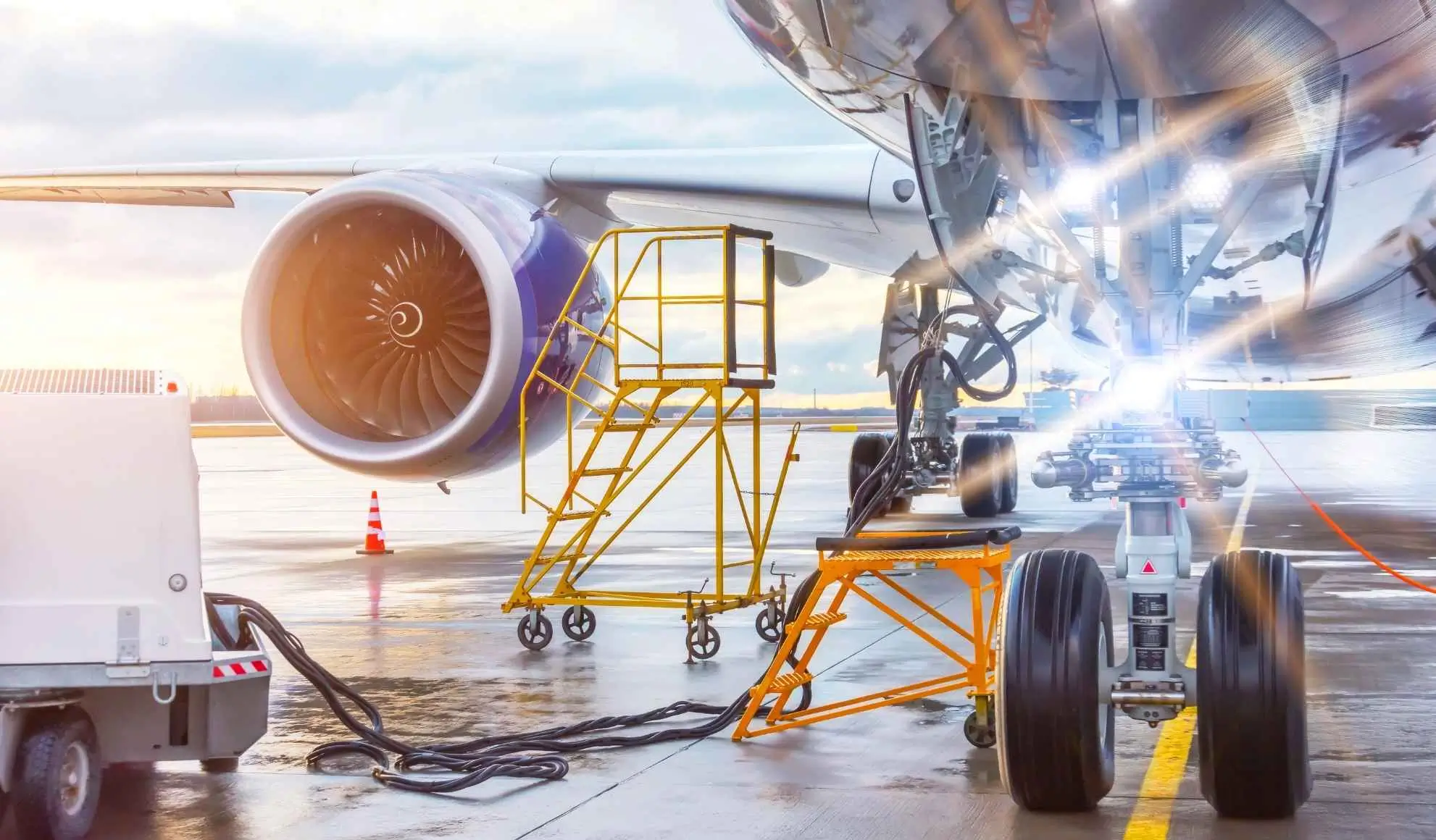
In the world of MICE charter flights, the goal is often to move large groups in a coordinated, punctual and seamless way.
However, the availability of SAF does not depend on the company chartering the aircraft.
For corporate charter flights:
- Availability depends on the airport and the operator.
- Costs may increase depending on the route.
- It is not always technically possible to refuel the aircraft with SAF.
- The high demand for MICE flights is not matched by sufficient SAF supply.
This is why, today, sustainability must also rely on alternative strategies, not only on fuel choice.
To understand how to plan a corporate charter efficiently – from aircraft selection to operational management – you may also find our dedicated article on how to plan a charter flight.
CO₂ emissions: ETS, CORSIA and the “invisible tax” you are already paying

Many clients ask: “Is there a CO₂ tax per ticket?”
The answer is yes, but it does not appear as an explicit line item on the ticket.
These are mandatory environmental costs that airlines must absorb and that are included in the final flight price through technical surcharges. They are not optional extras, but part of the European and international systems designed to limit emissions.
1. ETS – European Emissions Trading System
In Europe, airlines must purchase carbon credits for every tonne of CO₂ emitted during a flight.
The more CO₂ a route emits, the more credits the operator needs to buy.
This mechanism encourages the use of modern fleets and more efficient operating practices, but it also increases operating costs. These costs are then passed on to the customer through surcharges such as:
- Fuel surcharge.
- Environmental surcharge.
It is, therefore, a real and already active cost, even if it does not appear as an explicit “CO₂ tax” on the ticket or on a charter quotation.
2. CORSIA – ICAO’s global scheme
Internationally, the CORSIA programme (Carbon Offsetting and Reduction Scheme for International Aviation) will introduce a requirement (from 2027) for airlines to offset emissions from international flights through certified credits and verified environmental projects.
This means that, in addition to fuel and operational costs, every flight will have an environmental impact (resulting in a further increase in CO₂-related cost) that must be compensated.
Again, this compensation does not appear as a separate item for the customer; it is built into the overall pricing structure.
When SAF is not available: 5 concrete ESG actions for companies and the MICE industry

To date, SAF is not available as an option on most private and charter flights. Its presence is still limited to a small number of European airports, and supply priority almost always goes to major commercial airlines, which operate at far higher volumes. In addition, sustainable fuel remains significantly more expensive than traditional Jet A1 (the traditional aviation fuel), making its use not always economically viable for business aviation operators.
For this reason, Flyness recommends using realistic, measurable ESG strategies that help companies minimize the environmental impact of their travel, even when sustainable fuel is not readily available.
These concrete solutions, integrated into the operational flight design, allow travel managers and MICE agencies to meet their sustainability goals without sacrificing charter efficiency.
1.Reduce or eliminate aircraft repositioning
Repositioning can account for up to 30% emissions in a MICE project.
Operational planning agreed with the airline can reduce emissions to a minimum.
2.Certified CO₂ offsetting (Gold Standard, VERRA)
CO₂ output can be offset through certified environmental actions: no greenwashing, only verifiable and measurable projects.
3.Choose airports with more sustainable procedures
Some airports offer:
- Electric ground vehicles.
- Reduced taxi time.
- Advanced traffic management systems
Estimated emission reduction: 5–12%.
4.Streamline luggage, materials and catering
Less weight on board = lower fuel consumption.
Estimated reduction: 3–6%.
5.Request complete and integrable ESG reports
Flyness can request airlines’ precise CO₂ consumption data per passenger. In addition, Flyness can provide:
- Comparison between alternative routes and optimized routes.
- Support in reducing emissions through recommended operational choices.
- Requests to suppliers for ESG-ready documentation to integrate into sustainability reporting.
FAQ: Clear answers to the most common questions about SAF

Does SAF really reduce emissions?
Yes. Sustainable Aviation Fuel (SAF) – a fuel produced from renewable feedstocks – can reduce emissions by 60% to 80% over its full lifecycle (production, transport and use).
The aircraft burns SAF in the same way as traditional Jet A1 (fossil fuel), with an overall impact considerably lower because SAF is produced through processes that emit far less CO₂ than fossil fuel extraction and refining.
Can you request a 100% SAF flight?
No, you cannot. No commercial, private or charter aircraft can operate on 100% SAF, as current aviation certifications only allow blends up to 50% SAF mixed with Jet A1.
Additionally, availability is far too limited to guarantee high percentages. Today, even requesting a 20–30% blend can be challenging and depends entirely on the airport and the operator.
How much does sustainable fuel cost?
The SAF is generally more expensive than the Jet A1 by 2 to 4 times (fossil aviation fuel).
This means a flight quotation may include a SAF surcharge, reflecting the higher cost of sustainable fuel.
The price impact varies (depending on the airport and the blend percentage), but it can reach up to +25% on the fuel component of the flight.
At which airports is SAF available?
SAF availability in 2026 is still concentrated at a few airports with adequate infrastructure.
The airports with the most consistent supply include Amsterdam, Copenhagen, Oslo, London, Los Angeles and San Francisco.
In many other European airports, supply is restricted or available only on request. For business aviation, availability is not guaranteed, as major commercial airlines have priority supply agreements with providers.
Can you offset the CO₂ emissions of your flight?
Yes. Even when SAF is not available, emissions can be offset through:
- Certified carbon offset projects (Gold Standard, VERRA).
- SAF Book & Claim (a certification system that assigns the environmental benefits of SAF purchased elsewhere when it is not available at the departure airport).
- Operational optimizations, such as modern fleets, efficient routing and reduced repositioning.
These solutions enable companies to meet their ESG goals even when SAF cannot be physically used on the flight.
Why do charter flights use less SAF than commercial airlines?
Because production is still limited, available SAF is prioritized for commercial airlines, which purchase large volumes and operate from airports where sustainable fuel is more easily supplied.
Business aviation, on the other hand, often uses smaller or less structured airports, where SAF is not stored or accessible, and typically does not have long-term supply contracts like major airlines.
The sustainable future of private and charter flights

The path towards more sustainable aviation has already begun, but in 2026, it is still in a transitional phase. Sustainable aviation fuel (SAF) is currently the most concrete solution for reducing the environmental impact of flights. Yet its limited availability, high cost and not fully mature infrastructure prevent widespread use, especially in private jets and corporate charter flights.
For this reason, sustainability cannot rely on a single element – fuel – but must be built through a set of smart operational choices, from selecting the right operator to reducing repositioning, adopting Book & Claim programmes and using certified CO₂ offsetting.
In this scenario, the value of a partner like Flyness lies in the ability to simplify complexity, identify the most effective options on a case-by-case basis, and lead companies, travel managers and MICE planners towards decisions that are genuinely sustainable, measurable, and aligned with ESG goals.
The path ahead is clear: more alternative fuels, better infrastructure, stricter regulations and greater responsibility in flight planning.
Until SAF becomes fully accessible, sustainability is built through method, expertise and conscious choices: exactly what Flyness provides to every client.
Contact us to evaluate the most sustainable solutions for your private or charter flights: Flyness is at your disposal with dedicated consultancy.