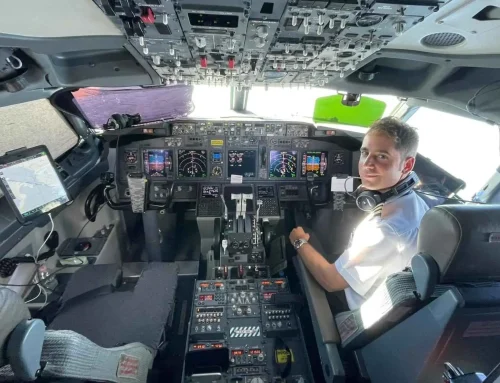

A charter flight is a flight organised on request, with route, schedule and services defined according to the client’s needs.
Unlike a scheduled flight, it does not necessarily follow a fixed timetable open to the public. It can be arranged for companies, tour operators, sports teams, groups, events, pilgrimages, tours, incentive travel or private transfers.
For incentive agencies, travel managers, tour operators, companies, sports teams and MICE, the point is not only to understand what a charter flight is, but what affects aircraft availability, operational feasibility, timings, costs and the overall quality of the service.
When requesting a charter flight, however, it is easy to come across technical terms such as ACMI, ferry flight, empty leg, airport slot, handling, technical stop, NOTAM, AOG and passenger manifest.
Understanding what they mean helps you to:
- Correctly interpret a quotation.
- Understand which elements influence the cost.
- Assess aircraft availability.
- Identify any operational constraints.
- Compare different charter solutions.
In this guide, we explain in simple words the main aviation terms that can have a real impact on flight planning.
Aviation terms for charter flights: what you really need to know

In air charter operations, the availability of an aircraft does not automatically mean the requested flight can be operated.
Every programme must be checked by considering:
- Departure airport and destination,
- Initial aircraft position.
- Number of passengers.
- Aircraft range and capacity.
- Requested schedule.
- Slot availability.
- Crew duty times.
- Ground handling services.
- Any airport restrictions.
- Baggage, equipment and special requirements.
- Possible technical stops.
- Required documentation.
For this reason, aviation language is not just a set of technical definitions. Some terms directly explain why one solution may be available, more expensive, less flexible or preferable to another.
| Term | Simple meaning | Why it matters when organising a charter flight |
|---|---|---|
| ACMI | An agreement between operators that includes aircraft, crew, maintenance and insurance. | It helps explain how additional capacity can be provided, especially for rotations, tour operators and series flights. |
| Ferry flight / positioning flight | An aircraft transfer flight, often operated without passengers. | It can affect availability, timings and final cost if the aircraft needs to reach the departure airport. |
| Empty leg | A sector operated without passengers because the aircraft had to return or be repositioned. | It can offer interesting pricing conditions, but only if route and schedule match the actual requirement. |
| Airport slot | An authorised time window for taking off or landing at an airport. | It determines whether the requested schedule is actually available, especially at busy airports or during major events. |
| Ground handling | Ground assistance services for passengers, baggage, crew and aircraft. | It is essential for a smooth boarding process, especially with groups, sports teams, equipment or special requirements. |
| Technical stop | An operational stop for refuelling, checks, crew change or other technical constraints. | It may be necessary to make a long or complex route feasible. |
| NOTAM | An official operational notice about restrictions, works, closures or temporary changes. | It can affect schedules, usable airports or flight feasibility. |
| AOG | An aircraft on the ground for technical or operational reasons. | It explains why quick alternatives or additional checks may be needed before departure. |
| Passenger manifest /flight manifest | A document containing the details of the people expected on board. | It is essential for airport procedures, safety, documentation and group management. |
| Cancellation policy | The conditions for changing or cancelling a charter flight. | It helps clarify penalties, timings, costs already committed and margins for flexibility. |
| Catering e servizi a bordo | Customisable elements such as menus, welcome service, branding and assistance. | They allow the experience to be adapted to the type of journey: corporate, sports, incentive or private. |
Availability and cost: ACMI, positioning flight and empty leg

The cost of a charter flight does not depend only on the distance between the departure and arrival airports.
Factors that can affect the quotation include aircraft position, the requested aircraft model, any positioning flights, the airports involved, slots, crew duty times and ground services. For a more complete analysis of the economic variables, you can read the guide “How much does a charter flight cost?”.
Distance is therefore only one component of the price. Two programmes with a similar route length can generate different quotations depending on aircraft position, fleet availability and operational complexity.
ACMI meaning
ACMI stands for Aircraft, Crew, Maintenance and Insurance. It is an operational agreement through which one carrier provides another carrier with an aircraft and the main resources needed to operate it.
It is not a formula purchased by the final customer requesting a single charter flight. It is used in programmes that require additional fleet capacity for a specific period.
It can be used for:
- Seasonal rotations.
- Series flights.
- Tour operator programmes.
- Temporary capacity expansion.
- Aircraft replacement.
- Peak demand coverage.
Practical example: a tour operator schedules weekly departures to a Mediterranean island throughout the summer season. If the partner carrier does not have sufficient capacity, it may use an ACMI agreement with another operator.
For passengers, the service continues to appear as a normal charter rotation. Behind the scenes, ACMI enables the carrier to provide aircraft, crew, maintenance and insurance for the entire programme.
For those organising series flights, understanding the meaning of ACMI helps clarify why availability does not depend only on whether a free aircraft exists, but also on operators, crews, maintenance, authorisations and insurance coverage.
Ferry flight and positioning flight meaning
A ferry flight, also known as a positioning flight, is a flight operated to move an aircraft from one airport to another.
It is often operated without passengers and is needed to position the aircraft where the charter service is due to begin.
It may be used to:
- Reach the departure airport.
- Return the aircraft to its base.
- Move the aircraft to the next rotation.
- Reposition the aircraft at an airport that is better suited to the programme.
- Carry out an operational or technical transfer.
Practical example: a company needs to depart from Bologna for a MICE event in Valencia, but the most suitable aircraft is positioned in Milan. Before passengers can board, the aircraft has to be transferred from Milan to Bologna.
That sector is a positioning flight.
For the client, the key point is that the initial aircraft position can affect:
- Final cost.
- Confirmation times.
- Availability.
- Operating schedule.
- Convenience of the proposed solution.
An aircraft located closer to the departure airport may be more cost-efficient, but this does not always mean it is the most suitable option in terms of capacity, range or configuration.
Empty leg meaning
An empty leg is a sector operated without passengers because the aircraft needs to return to base or reach another airport for an already scheduled flight.
Empty legs are particularly common in the private jet sector.
They can offer interesting pricing conditions when:
- The route matches the requested journey.
- The date is compatible.
- The available schedule is suitable.
- The passenger can accept reduced flexibility.
| Aspect | Empty leg |
|---|---|
| Advantage | It may be offered at more interesting pricing conditions. |
| Limitation | Route and schedule depend on an already scheduled flight. |
| When it is convenient | When route, date and schedule match the actual requirement. |
| When it is not suitable | When fully customised airports, services or schedules are required. |
Practical example: a jet flies a client from Milan to Paris and then needs to return empty to Italy. If another passenger needs to travel on a compatible route, they can consider that empty leg.
An empty leg is not a “low-cost charter”. It is an occasional availability, strictly linked to the aircraft’s main schedule.
The client should also consider that any changes to the original flight may affect the availability of the empty sector.
Airports and ground operations: slots, handling and technical stops

The choice of airport and the management of ground operations are central aspects of a charter flight, as they can affect schedules, services, transfer times and the feasibility of the programme.
A charter flight offers greater flexibility than a scheduled flight, but this does not mean that every request can be confirmed without checks. Airports, slots, handling services, temporary restrictions and technical stops must be assessed before the flight operation is defined.
Airport slot: what is it?
An airport slot is an authorised time window for a take-off or landing at a specific airport.
Having an aircraft available does not automatically mean being able to depart at the desired time. Some airports are congested, others have operational limitations, while others require specific authorisations.
Practical example: a corporate group wants to take off at 9:00 to arrive in time for a convention. However, the airport can only authorise departure within a different time window.
The broker can therefore assess:
- changing the schedule;
- using an alternative airport;
- suggesting a different organisation of ground transfers;
- selecting a different operational solution.
The slot is therefore not an administrative detail, but an element that can determine the actual feasibility of the programme.
Ground handling: what is it?
Ground handling includes the ground assistance services required to manage passengers, crew, baggage, aircraft and operational procedures.
It is a less visible part of the journey, but it is essential for making the service run smoothly, especially when large groups or specific requirements are involved.
| Service | Function |
|---|---|
| Passenger welcome | Support for the group, directions, assistance and coordination. |
| Check-in | Management of acceptance procedures. |
| Baggage | Coordination of luggage, equipment and special materials. |
| Crew assistance | Operational support for pilots and cabin crew. |
| Aircraft coordination | Parking, refuelling and preparation. |
| Documentation procedures | Verification of passenger lists and documents. |
| Special assistance | Support for reduced mobility, minors or specific requirements. |
| Apron transport | Connection between terminal and aircraft. |
Practical example: a sports team travels with athletes, technical staff, doctors, managers, oversized baggage and equipment.
The handler coordinates the welcome, boarding procedures, material handling and interaction with the aircraft.
Well-organised ground handling helps to:
- Reduce waiting times.
- Avoid mistakes on documentation.
- Simplify group management.
- Coordinate special baggage.
- Respect operating times.
- Make the entire departure and arrival process more orderly.
Technical stop meaning
A technical stop is a stop made for operational reasons, not for commercial or tourism purposes.
It may be necessary for:
- Refuelling.
- Checks.
- Crew change.
- Compliance with duty times.
- Range limitations.
- Weather conditions.
- Airport restrictions.
- Bringing together groups departing from different airports.
Practical example: a group needs to reach a non-European destination with an aircraft that cannot cover the entire route without refuelling.
An intermediate technical stop is therefore scheduled, allowing the journey to be completed in compliance with operational requirements.
A technical stop can affect:
- Total flight duration.
- Passenger comfort.
- Cost.
- Crew duty times.
- Onboard services.
- Transfer planning.
In some cases, it can be avoided by selecting an aircraft with greater range. In others, it is the most rational, efficient or technically feasible solution.
Operational restrictions and unexpected issues: NOTAM and AOG

A charter programme can be defined with great precision, but it must still take into account temporary restrictions, operating conditions and possible technical unavailability.
Among the most important terms in this area are NOTAM and AOG.
NOTAM meaning
NOTAMs are official notices that communicate temporary information relevant to flight safety and operations.
They may concern:
- Runway closure.
- Airport works.
- Airspace limitations.
- Temporary obstacles.
- Restrictions on take-off or landing.
- Changes to available services.
- Security measures.
- Institutional events.
- Military exercises.
- Temporary changes to airport procedures.
Passengers do not need to read or interpret NOTAMs directly. This information is assessed by operators during planning and before flight departure.
Practical example: the airport planned for arrival has a runway temporarily closed for work during certain time windows.
It may become necessary to:
- Change the schedule.
- Choose another airport.
- Use a different runway.
- Reorganise ground transfers.
- Check an alternative programme.
Knowing that NOTAMs exist helps explain why a request must undergo an operational check even when the aircraft and crew appear to be available.
AOG meaning
AOG stands for Aircraft on Ground and refers to an aircraft that is temporarily grounded for technical or operational reasons preventing its use.
It does not necessarily indicate a serious situation. However, it does mean that the aircraft cannot operate until the necessary checks or interventions have been completed.
Practical example: the day before departure, the aircraft scheduled for a charter flight is grounded for a technical check.
In this case, it is necessary to:
- Check recovery times.
- Liaise with the carrier.
- Verify the availability of replacement aircraft.
- Assess any schedule changes.
- Coordinate airports and services.
- Inform the client about the available alternatives.
The role of the air charter broker is not only to identify an aircraft at the quotation stage.
It also includes:
- Coordinating the parties involved.
- Assessing alternatives.
- Managing communications.
- Providing support in the event of operational changes.
It is not always possible to eliminate every risk of unexpected issues, but effective coordination helps reduce their impact and speed up the search for a solution.
Managing groups and events: documents, conditions and customised services

When a charter flight involves large groups, events, sports teams, pilgrimages or tour operator programmes, document and contractual management plays a central role.
These aspects are not secondary details. They can directly affect the regularity of boarding, the quality of the service and the costs incurred in the event of changes.
Passenger manifest and passenger list
The passenger manifest, or flight passenger list, is the document that contains the details of the people expected on board.
Depending on the type of flight and destination, it may include:
- Name and surname.
- Date of birth.
- Nationality.
- Gender.
- Document details.
- Document expiry date.
- Presence of minors.
- Accompanying persons.
- Assistance requests.
- Seat assignments.
- Information required by the authorities.
- Contact details of the group leader.
Practical example: an incentive group of 120 people needs to depart for a corporate event abroad.
Last-minute changes, errors in names, expired documents or incomplete data can cause delays during check-in or require additional checks.
To reduce the risk of issues, the list must be:
- Correctly completed.
- Updated.
- Checked within the required deadlines.
- Sent in the requested format.
- Consistent with the documents used by passengers.
For MICE groups, sports teams, tour operators and pilgrimages, the accuracy of the passenger manifest is an essential part of the organisation.
Cancellation policy
The cancellation policy defines the conditions that apply in the event of a change to or cancellation of a charter flight.
It may specify:
- The deadline for cancellation.
- Applicable penalties.
- Non-recoverable costs.
- Conditions for changing the date or schedule.
- How an airport change is handled.
- Rules for passenger substitutions.
- Costs relating to services already confirmed.
- Consequences of route changes.
- Responsibilities of the parties involved.
In charter aviation, the aircraft, crew, slots and services are committed according to the client’s programme.
For this reason, cancellation conditions may differ from those applied to a standard airline ticket.
Practical example: a corporate event is postponed a few days before departure.
Some services may be rescheduled, while others may already have been generated:
- Penalties.
- Positioning costs.
- Airport charges.
- Crew commitments.
- Catering costs,
- Non-refundable handling services.
The cancellation policy should be analysed before confirming the service and assessed considering how fixed or variable the programme is.
Catering, branding and onboard services
Catering, branding and onboard services are customisable elements of a charter flight, but they depend on the type of aircraft, the duration of the flight, the passenger profile and operational feasibility.
In this glossary, it is enough to remember that customisation can involve several aspects: menus, welcome services, onboard messages, branded materials, service configuration and the overall atmosphere of the journey. To explore these topics in more detail, you can also read the dedicated articles on airline catering and charter flight customisation for corporate events.
Practical example: an incentive agency organises a trip for a company and wants the experience to begin on board.
Depending on carrier and airport availability, the customisation of the following elements can be assessed:
- Welcome service.
- Catering.
- Gadgets.
- Onboard communications.
- Visual elements linked to the brand.
Feasibility depends on the type of aircraft, the carrier, the airports involved and the time available for organisation.
Understanding aviation terminology to make better charter decisions

Knowing the meaning of the main aviation terms helps you interpret a charter proposal more clearly.
Each term describes a concrete variable:
| Term | What it helps you understand |
|---|---|
| Ferry flight | Why aircraft position affects the proposal. |
| Empty leg | When a sector can be advantageous, but less flexible. |
| Airport slot | Why the desired schedule cannot always be confirmed immediately. |
| Ground handling | How passengers, baggage and ground services are managed. |
| Technical stop | Why some routes require an operational stop. |
| Passenger manifest | Why the passenger list must be accurate and up to date. |
| Cancellation policy | Which conditions regulate changes and cancellations. |
This is where the broker’s work becomes valuable: they analyse the programme and identify the solutions available on the market. The air charter broker translates a commercial or organisational requirement into a technically sustainable flight solution.
Are you organising a charter flight for a group, an event or a corporate trip? Flyness helps you turn requirements, schedules and operational constraints into a concrete flight solution.
Request a custom consultation: together, we will analyse the needs and purpose of your journey to build the most suitable flight for your programme.