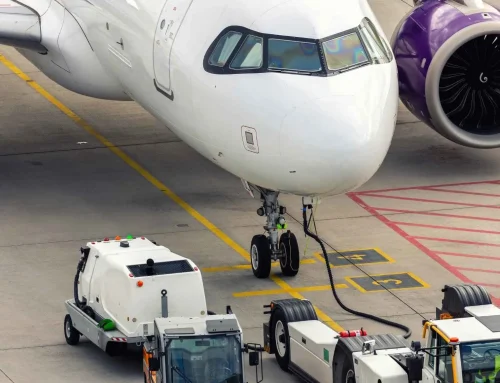
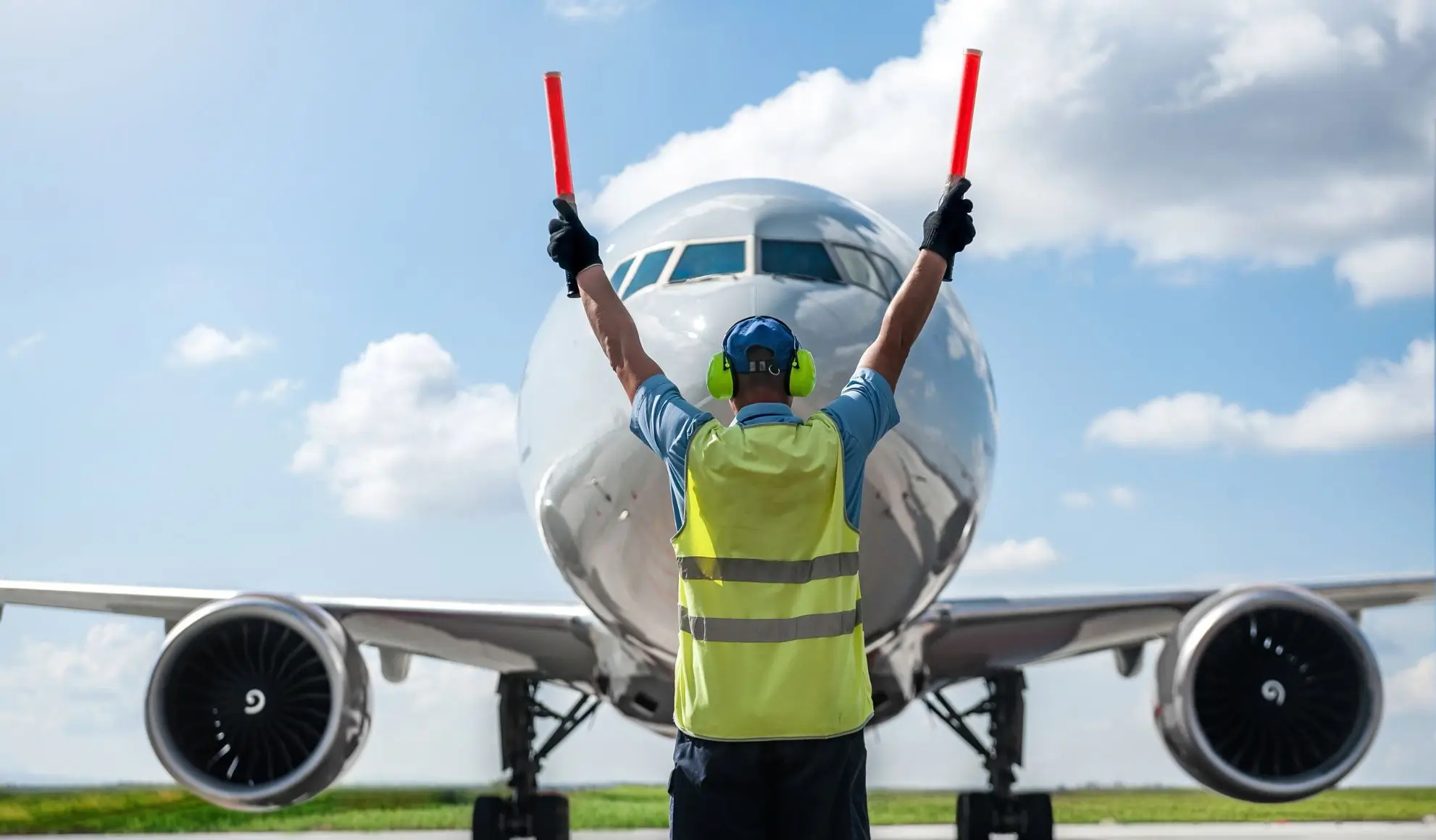
Aircraft ground handling includes all the assistance services provided on the ground before a flight departs and after it arrives. These include check-in, boarding, baggage handling, ramp assistance, aircraft cleaning, catering, refuelling and crew support. For charter flights, ground handling services are arranged according to the airport, aircraft, number of passengers and the specific requirements of the group.
Several professionals are involved behind the scenes to ensure smooth boarding, efficient baggage handling and proper aircraft preparation, each with clearly defined tasks and responsibilities.
Understanding how ground handling works helps companies, MICE agencies, Tour Operators and sports organisations provide more complete information, anticipate potential issues and better understand what happens on the ground before take-off and after landing.
What does aircraft ground handling include?
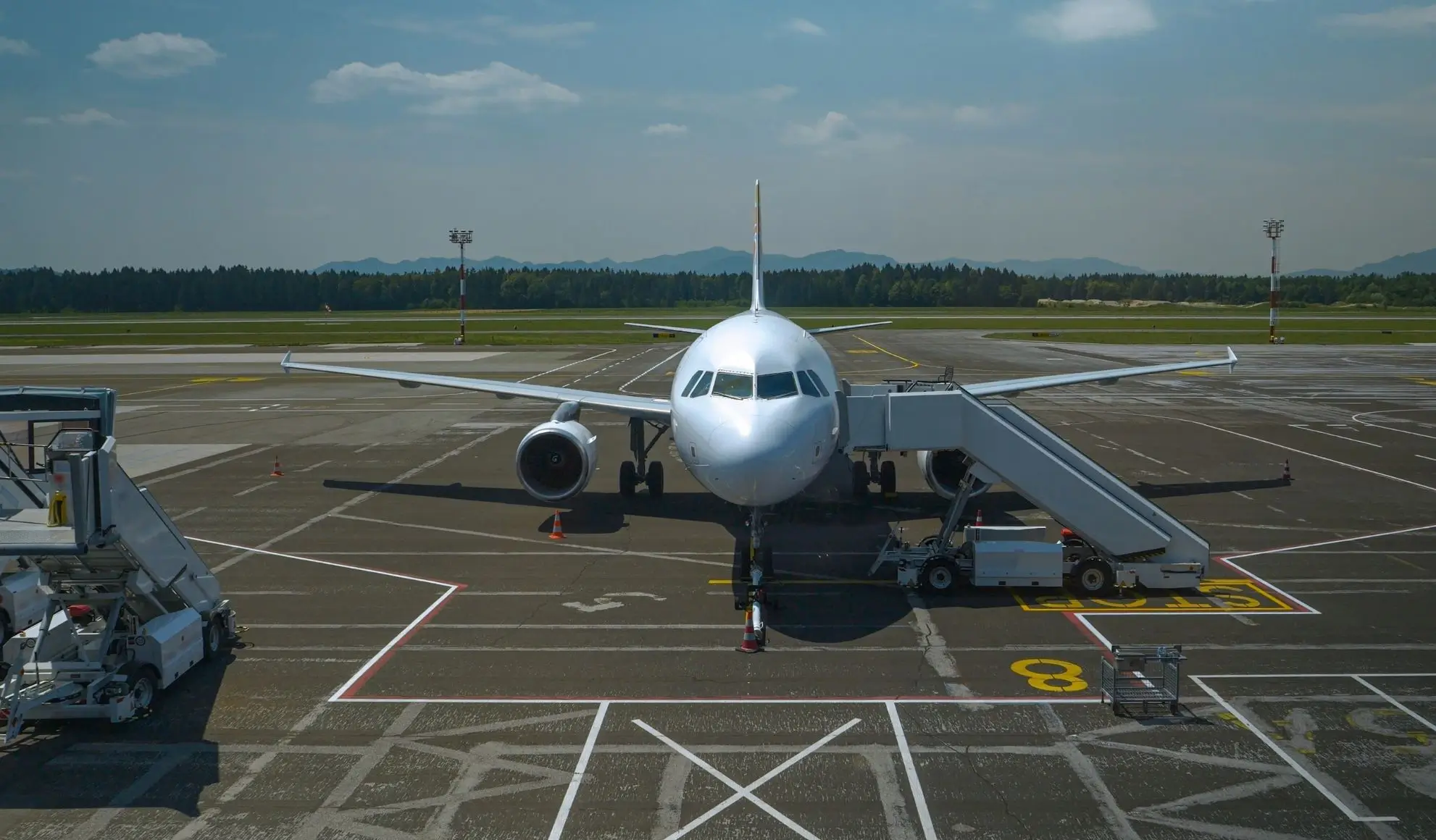
Aircraft ground handling covers services provided to the airline, aircraft, passengers, crew, baggage and, where applicable, cargo.
It should not be confused with the overall management of an airport and does not include all the services available within the airport, such as shops, car parks, public restaurants or transport connections to and from the city.
For a charter flight, ground handling covers everything that needs to be arranged on the ground to ensure that passengers, baggage and crew can depart and arrive according to the agreed flight schedule.
What is a ground handling agent and what are its responsibilities?
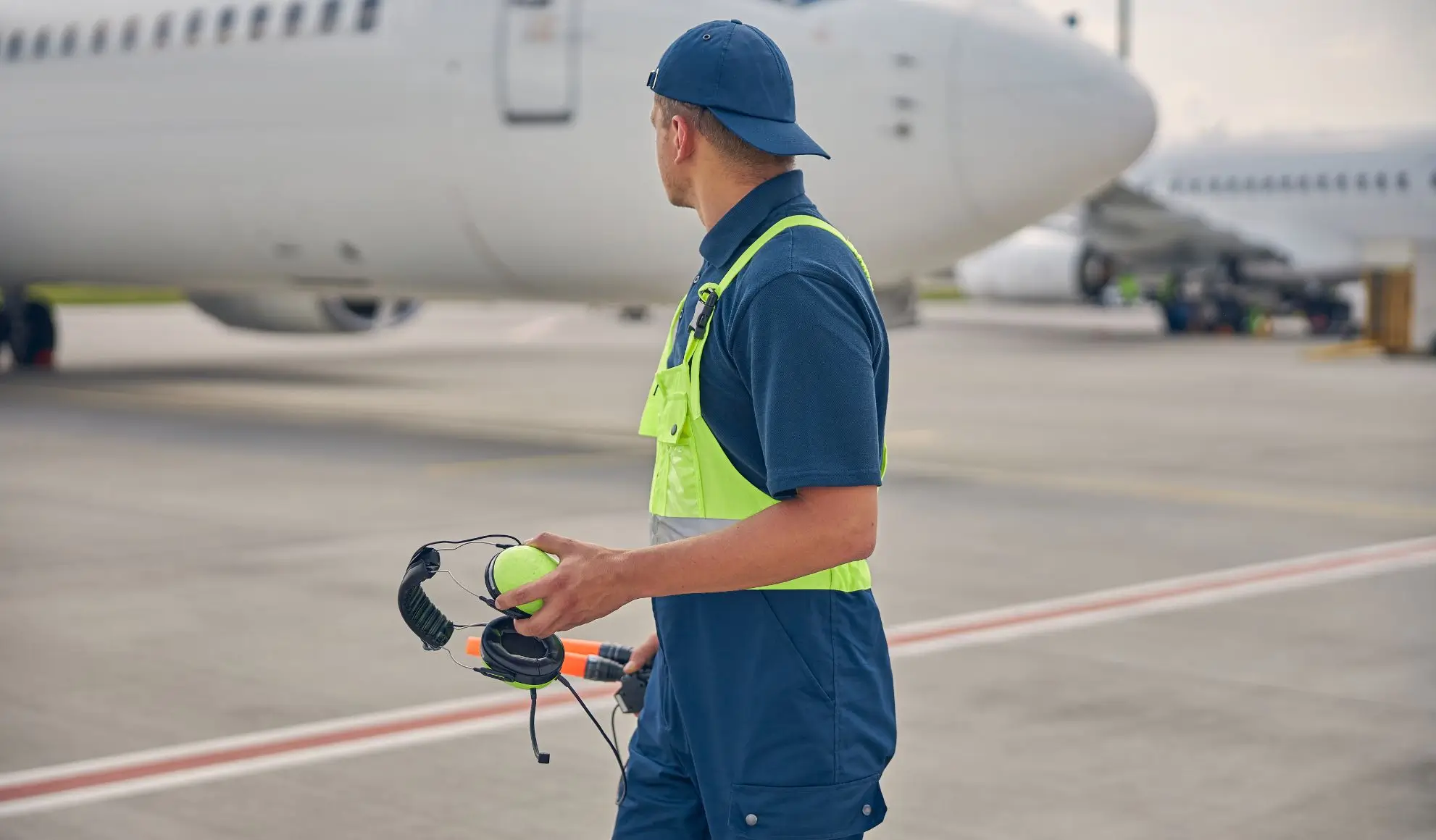
A ground handling agent is an organisation authorised to provide one or more ground handling services at a specific airport.
According to ENAC, handling encompasses the services carried out at airports to provide ground assistance to third parties, air carriers and airport users, as well as self-handling services. In Italy, providers must be certified in accordance with national legislation and applicable European regulations, which also govern access to the ground handling market at European Union airports.
ENAC publishes an up-to-date list of certified ground handling service providers and the airports where they are authorised to operate.
As a general rule, the air carrier enters into agreements with the ground handler and determines which company it will work with at the relevant airport.
The airline operating the charter flight provides the handler with flight details, required services and operational information. The airport ground handler then organises the staff, equipment and procedures required to perform the agreed activities.
The scope of these services may vary from one airport to another. An airport may have several authorised handlers, a single provider for certain categories of service, or services provided directly by the airport managing body, provided that all applicable requirements are met.
The ground handler does not determine the flight schedule, route, aircraft, commercial conditions or conditions of carriage. These remain the responsibility of the carrier and the other parties involved.
Its role is to perform the agreed ground handling services on behalf of the airline, within the operational framework of the airport.
What are the main ground handling services?
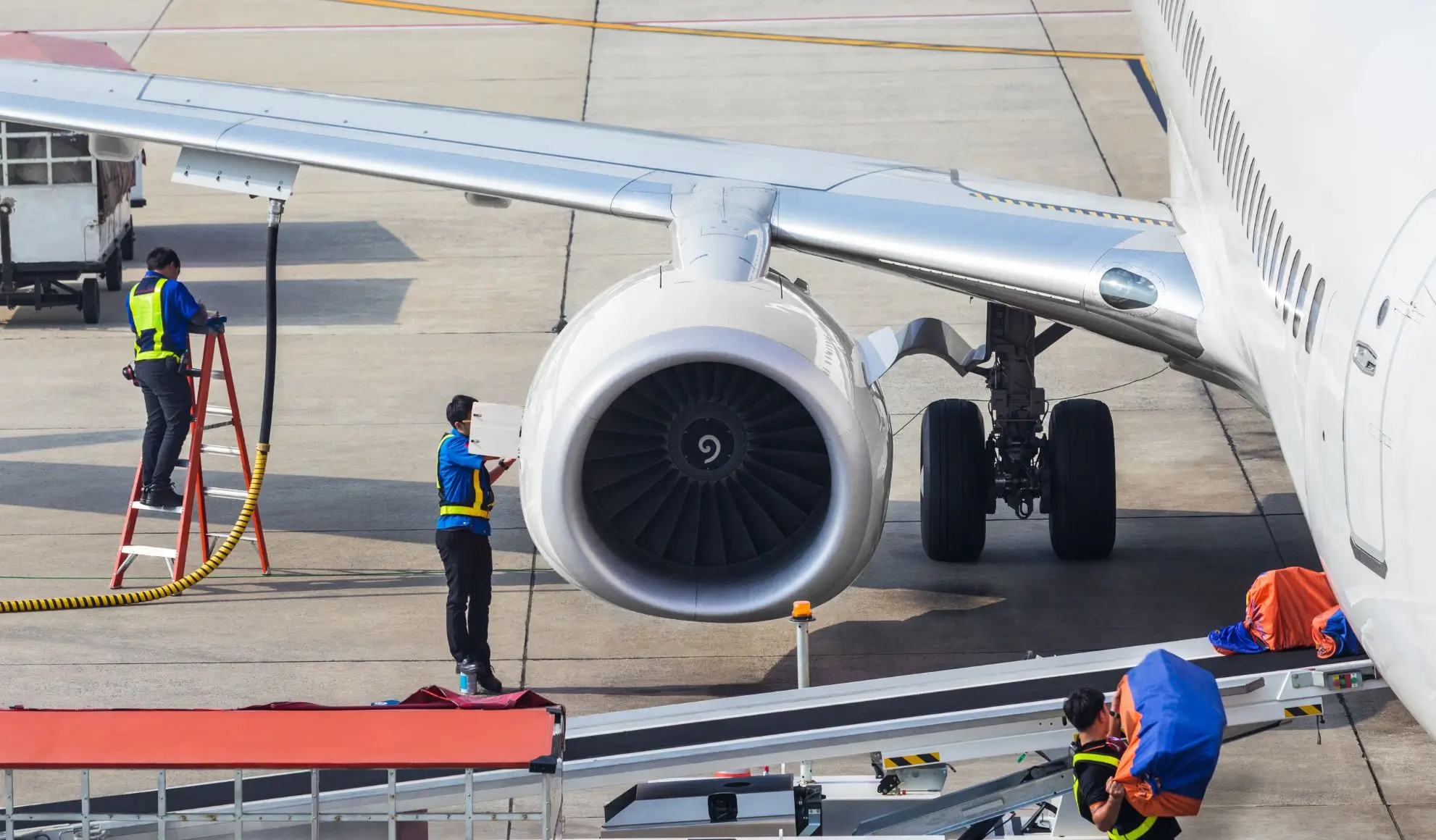
Ground handling services can be divided into three main areas:
| Area | Main activities |
|---|---|
| Passengers | Check-in, travel documents, gate assistance, boarding, disembarkation and special assistance |
| Baggage and equipment | Tagging, sorting, loading, unloading and oversized baggage handling |
| Aircraft and crew | Ramp services, cleaning, catering, refuelling, pushback and crew support |
The actual combination of services depends on the flight. A charter flight for a sports team, for example, may require different equipment and procedures from a MICE charter or a seasonal charter rotation operated for a Tour Operator.
Passenger assistance at the airport
Passenger assistance includes the activities required to support travellers from their arrival at the airport through to boarding and, at destination, from the aircraft to the airport exit.
Services may include:
- opening and managing check-in desks.
- checking travel documents in accordance with the carrier’s procedures.
- issuing boarding passes.
- seat allocation.
- gate assistance.
- organising boarding and disembarkation.
- providing passenger information.
- support in the event of changes.
- coordination with assistance services for passengers with disabilities or reduced mobility, according to the airport’s procedures.
- management of dedicated routes, desks or areas, where available.
For group charter flights, passenger assistance requires particular attention to passenger flows.
A large number of people arriving at the same time, perhaps on several coaches, must be efficiently distributed between check-in, security and boarding. Even a few minutes lost at one stage can have an impact on the subsequent stages.
Baggage handling at the airport
As part of airport baggage handling, baggage is accepted, identified, checked, routed, transported to the aircraft, loaded into the hold and returned to passengers upon arrival.
For oversized baggage or special equipment, advance information is required regarding dimensions, weight, quantity and transport requirements.
The most common baggage handling services include:
- weighing and tagging.
- baggage routing.
- passenger-baggage reconciliation.
- transport to the aircraft.
- loading and unloading.
- transport to the baggage reclaim area.
- oversized baggage handling.
- procedures for special equipment or materials.
IATA standards focus on baggage tracking and reliable data exchange to reduce handling errors and improve the information provided to passengers.
Effective communication between load control and ramp staff is also essential during baggage and equipment loading and unloading.
Charter flights may involve baggage or equipment that requires specific planning, including:
- sports equipment.
- flight cases, i.e. professional hard cases for instruments and technical equipment.
- musical instruments.
- technical equipment.
- medical devices.
- bulky or fragile items.
The airline determines in advance which items can be carried, in what quantities and under which conditions. The ground handler then applies the procedures specified by the carrier.
Ground handling services for aircraft and crew
The period between an aircraft’s arrival and its subsequent departure is known as the turnaround. Several activities must be coordinated within this timeframe, often simultaneously.
Depending on the airport and the type of operation, these may include:
- aircraft positioning.
- parking assistance.
- provision of boarding stairs or other boarding equipment.
- baggage handling.
- cabin cleaning.
- potable water supply.
- lavatory servicing.
- ground power supply.
- heating or air conditioning.
- pushback operations.
- refuelling coordination.
- catering loading.
- documentation and logistical assistance for the crew.
- crew transport between the aircraft and terminal.
Operational manuals such as the IATA Ground Operations Manual help standardise ramp and ground handling procedures, reducing operational differences between airlines, airports and ground handlers.
As mentioned above, many of these activities take place simultaneously. Effective turnaround management prevents delays in cleaning, baggage loading or refuelling from creating a knock-on effect on subsequent operations.
Who manages airport ground handling? Roles and responsibilities
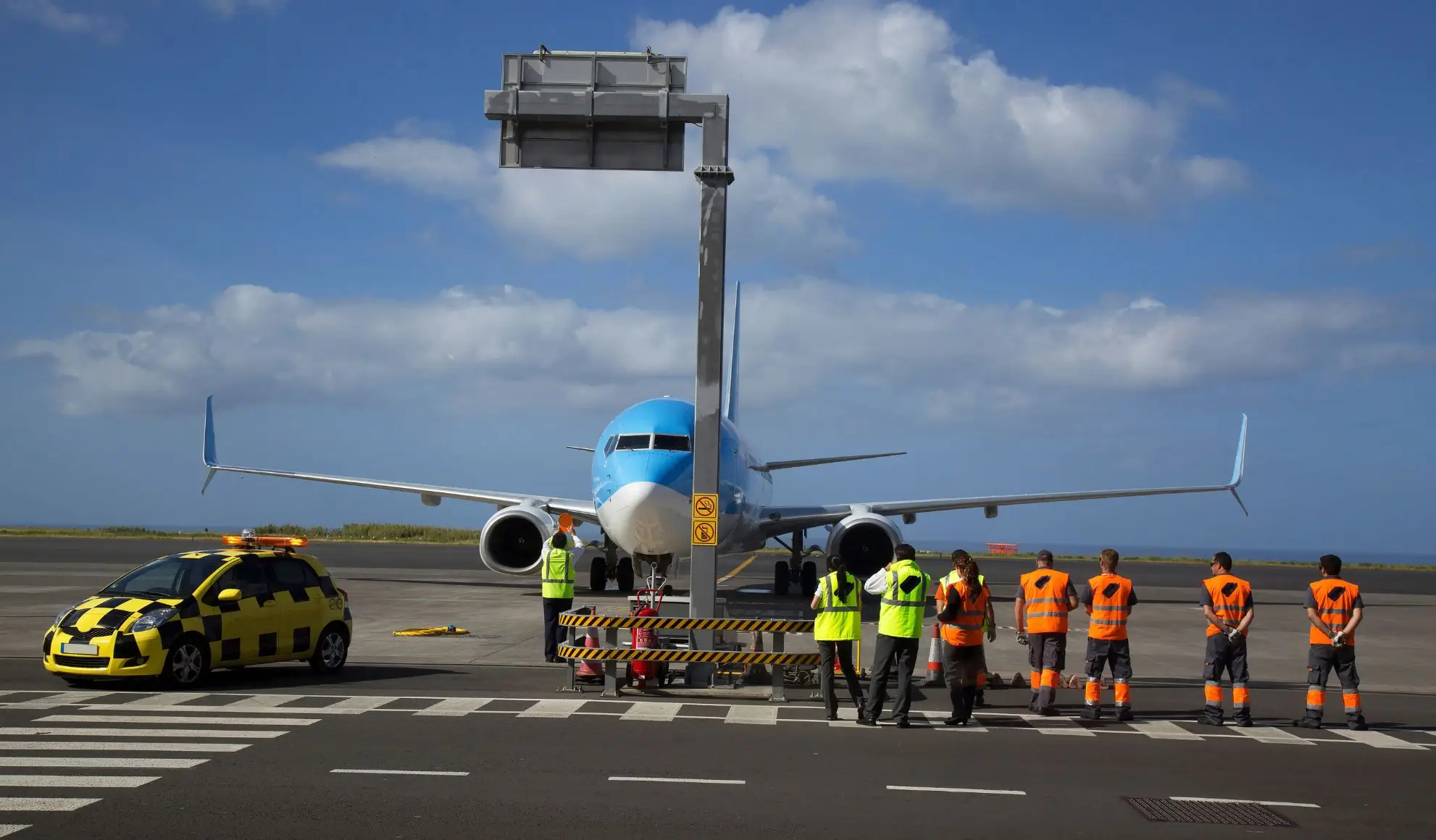
Different parties are involved in the charter flight organisation, and their roles and responsibilities should not be confused.
| Party | Main function | Role in ground handling |
|---|---|---|
| Ground handling agent | Provides ground assistance services | Organises staff and equipment for the activities agreed with the carrier |
| Airport managing body | Manages airport infrastructure and coordinates operators working at the airport | Ensures services are available and may, in some cases, provide them directly |
| Air carrier | Operates the flight and assumes the responsibilities associated with air transport | Generally, enters into agreements with the ground handler and defines the services required |
| Air charter broker | Analyses the brief, sources the carrier and coordinates the client’s requirements | Monitors the agreed services, maintains communication and may directly coordinate certain ancillary services |
| Flight Rider | On-site operational representative who oversees the flight on behalf of the broker or client | Facilitates coordination between the client, carrier, ground handler, crew and other parties involved |
How does charter flight ground handling work?
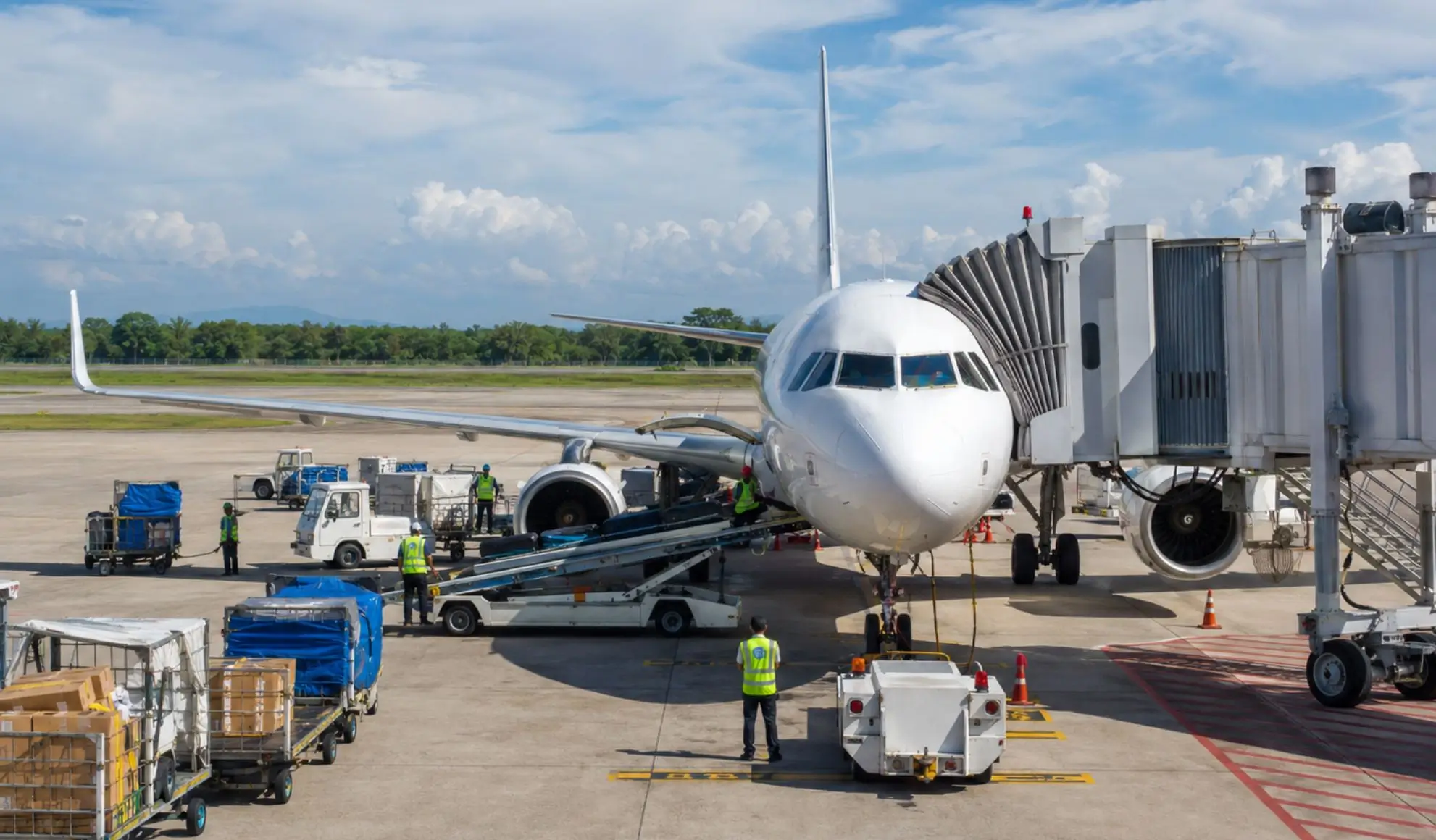
Once the carrier, aircraft and flight schedule have been confirmed, the required ground handling activities are defined for each airport involved.
The carrier communicates the relevant information to its ground handler, while the broker supervises the process and checks that everything agreed with the client has been correctly communicated and implemented.
Before departure
Before departure, all required passenger lists, baggage quantities and types, oversized items, special assistance requirements, onboard services and planned customisations must be communicated.
Late requests can be difficult to accommodate, particularly when they require additional staff, authorisations or external suppliers.
During departure operations
On the day of the flight, the ground handler activates the planned services, while the broker monitors the operation and remains in contact with the client, carrier and airport representatives.
When a Flight Rider is present, on-site supervision makes it easier to identify potential issues quickly: a delayed coach, equipment that has not yet been delivered, a passenger requiring special assistance or customisation materials that still need to be placed on board.
After landing
Upon arrival, ground handling services mainly involve assisting passengers during disembarkation and managing baggage reclaim.
For same-day return flights, operations at destination must also be coordinated with the subsequent departure. Baggage, catering, cleaning, crew requirements and the group’s schedule must all converge towards the new departure time.
How do ground handling services differ for MICE, sports and Tour Operators?

The core activities are similar, but the way they are organised varies considerably depending on the passengers and the purpose of the trip.
| Type of flight | Most common ground handling requirements |
|---|---|
| MICE and incentive groups | Welcome desk, signage, coordinated check-in, passenger list management, aircraft customisation and coordination with transfers |
| Sports teams | Oversized equipment, medical and technical supplies, schedules aligned with the competition, fast-track procedures and separate management of athletes, staff and executives |
| Tour Operators | Large passenger flows, updated passenger lists, repeatable procedures, series of rotations and continuous coordination with airport assistants and transfer providers |
| Orchestras and tours | Fragile instruments, flight cases, technical equipment and controlled loading and baggage reclaim times |
| Groups with specific requirements | Pre-booked assistance, dedicated equipment, longer boarding times and advance coordination |
Ground handling for MICE and incentive groups
On a MICE charter flight, the participant experience begins at the airport.
The brief may include:
- dedicated desks, signage and assistants.
- check-in and seat allocation for different subgroups.
- coordination with coaches and transfers.
- snacks, beverages and welcome materials.
- headrest covers, stickers and authorised branding elements.
- management of group arrival and boarding times.
Not every type of customisation is always possible, as this depends on carrier authorisations, permitted materials and airport procedures. However, it is generally possible to recreate the atmosphere of the planned event on board.
In some cases, supplies are managed through agreements with the carrier and ground handler. In others, the broker may directly coordinate specific suppliers or materials, such as snacks, beverages or cabin customisation elements.
Ground handling for sports teams
Sports teams often travel with large quantities of equipment and require particular attention to timing, privacy and security.
Ground handling must take into account:
- the volume of equipment and the time required to load it into the hold.
- passenger reception and boarding, which may be organised separately for athletes, staff, executives, sponsors and media.
- ground coordination for post-match return flights, where departure time also depends on the end of the competition and the transfer to the airport.
- any privacy requirements, controlled access or separation from regular airport passenger flows.
Ground handling for Tour Operators
For flights organised by Tour Operators, ground handling must support large and often recurring passenger flows.
A charter series requires consistent procedures for:
- submitting passenger lists.
- managing changes.
- seat allocation.
- check-in.
- passenger assistance.
- baggage handling.
- coordination with airport assistants.
- coordination with transfer services.
- communication in the event of operational changes.
The repetitive nature of charter rotations does not eliminate the need for careful supervision. Each departure may involve changes in passenger numbers, baggage, schedules or required services.
How much do ground handling services affect the cost of a charter flight?
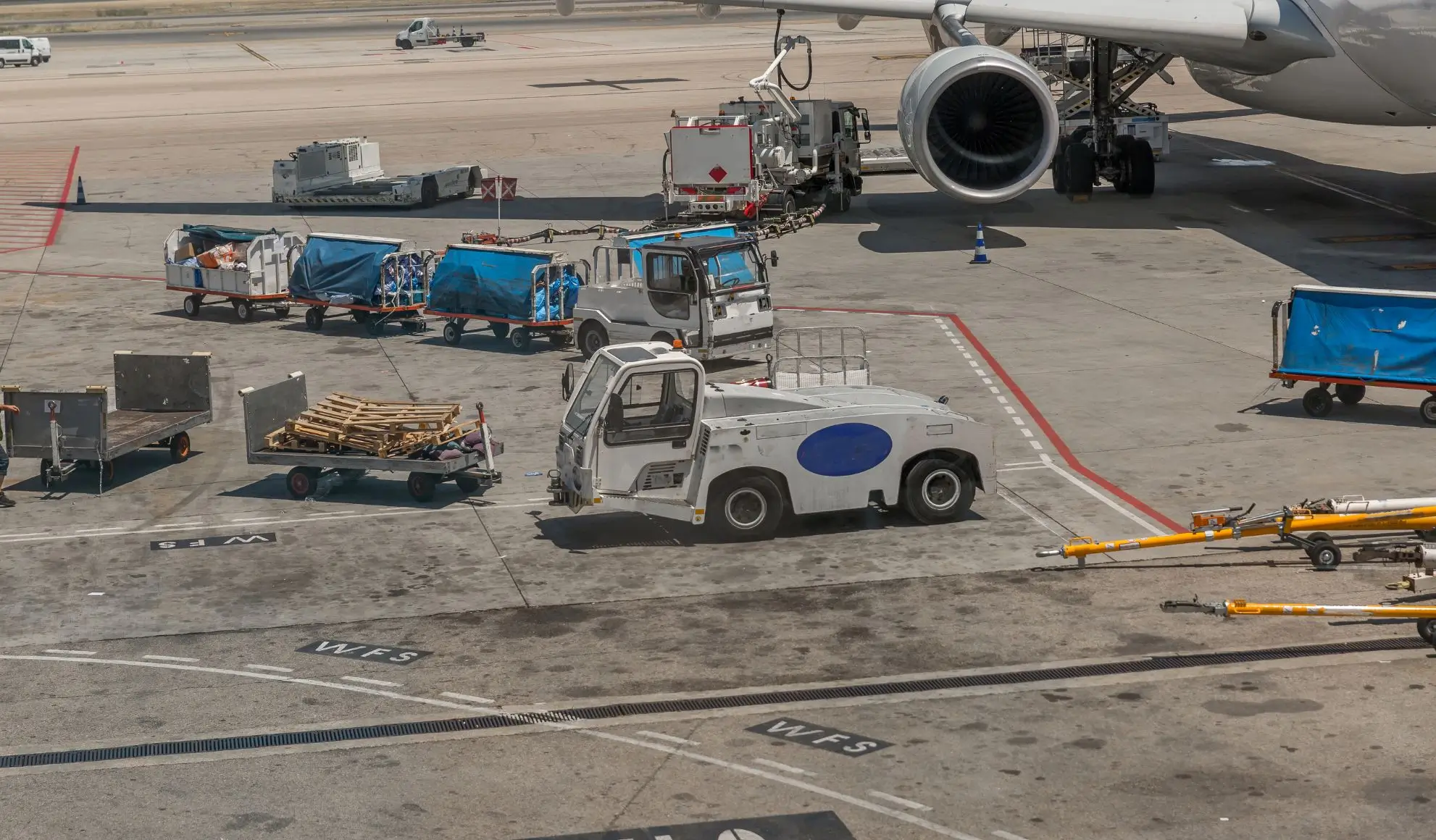
The cost of aircraft ground handling is not fixed. It mainly depends on the airport, aircraft type, number of passengers, parking time, operating hours and any additional services required.
In a charter quotation, ground handling may be included in the total price or shown separately together with any ancillary services.
The main variables include:
| Variable | How it can affect the cost |
|---|---|
| Airport | Local charges, availability of service providers and airport organisation |
| Aircraft | Size, weight, category and equipment required |
| Number of passengers | Staff required for check-in, boarding, baggage and assistance |
| Length of stay | Parking and services required while the aircraft remains at the airport |
| Operating time | Possible night, public holiday or out-of-hours surcharges |
| Special baggage | Additional equipment, staff and procedures |
| Dedicated assistance | Staff or equipment required for specific needs |
| Ancillary services | Catering, snacks and beverages, welcome desks, lounges and customisation |
| Urgency | Late requests or last-minute changes |
| Charter series | Number of rotations and repeated organisation of services |
What is Flyness’s role in coordinating ground handling?
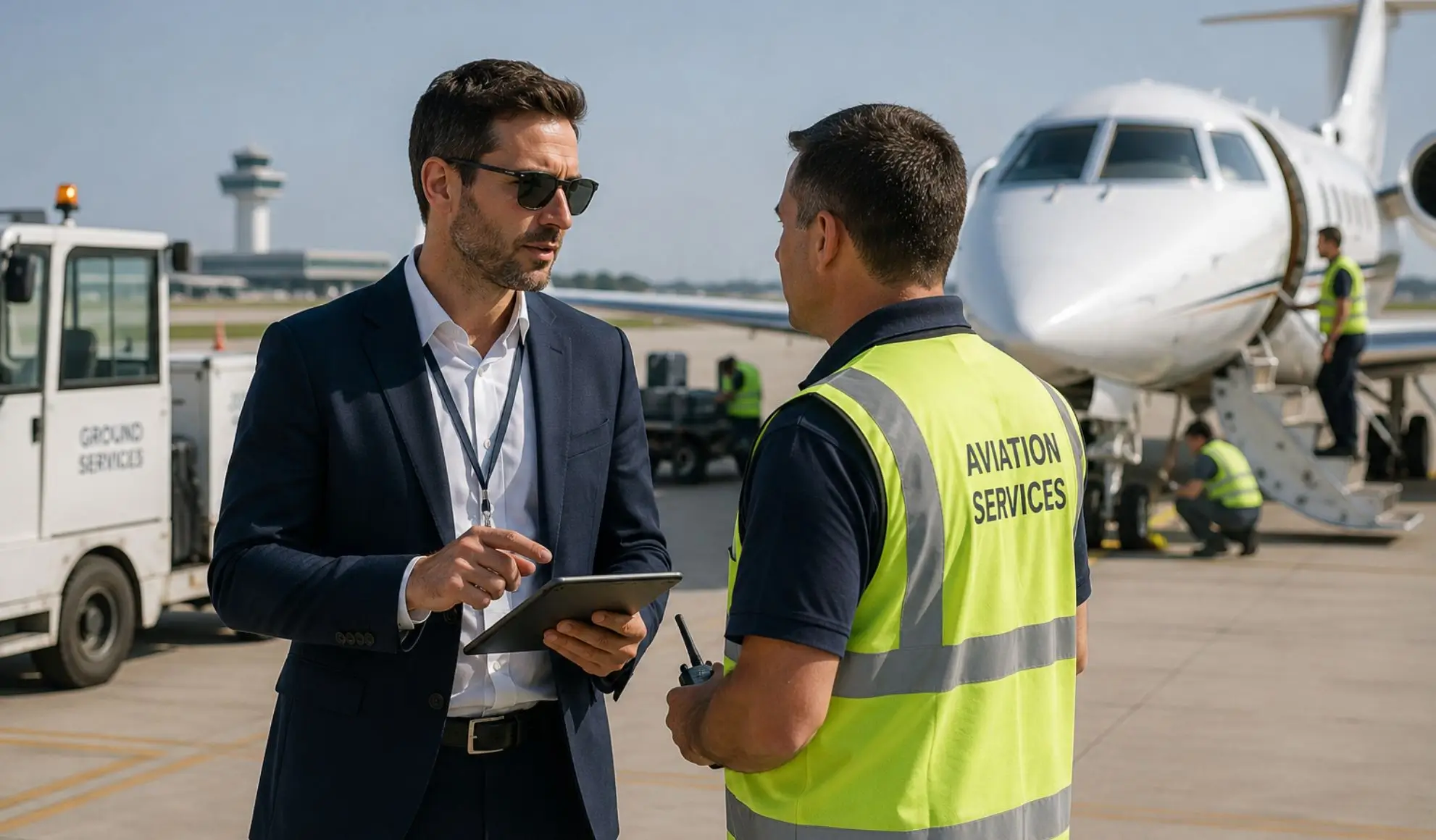
For charter flights, the air carrier generally enters into agreements with the ground handling company operating at the departure or arrival airport.
However, this does not mean that the role of an air charter broker is limited to forwarding a request.
A broker with extensive knowledge of airport operations knows the operators, contacts and procedures used to manage services at different airports. This means the broker can:
- formulate precise requests.
- liaise with the carrier.
- check that requirements have been correctly understood.
- identify potential inconsistencies.
- flag critical issues.
- maintain contact with the relevant parties.
- monitor the progress of operations.
- respond quickly to changes.
- directly coordinate certain ancillary services.
Flyness has developed particularly in-depth knowledge of Milan Malpensa, Bergamo and Turin airports, where it can rely on established contacts and long-standing professional relationships. Over time, the same network has been developed at other frequently used airports in Italy and abroad.
This supervision does not transfer the responsibilities of the carrier, ground handler or airport managing body to Flyness. It does, however, enable more accurate coordination and reduce the risk of errors.
The same principle applies to aircraft customisation.
Headrest covers, stickers, welcome materials, snacks, beverages and other branding elements must be approved by the carrier and coordinated with ground operations. Depending on the project, these items may be provided through the airline’s existing agreements, coordinated directly by the broker with trusted operators and suppliers, or supplied by the client.
Flyness’s role is to translate the client’s requirements into clear operational instructions, while maintaining critical oversight of the process and a constant connection between the organisation commissioning the flight and the parties responsible for operating it.
Why is ground handling essential when organising a charter flight?
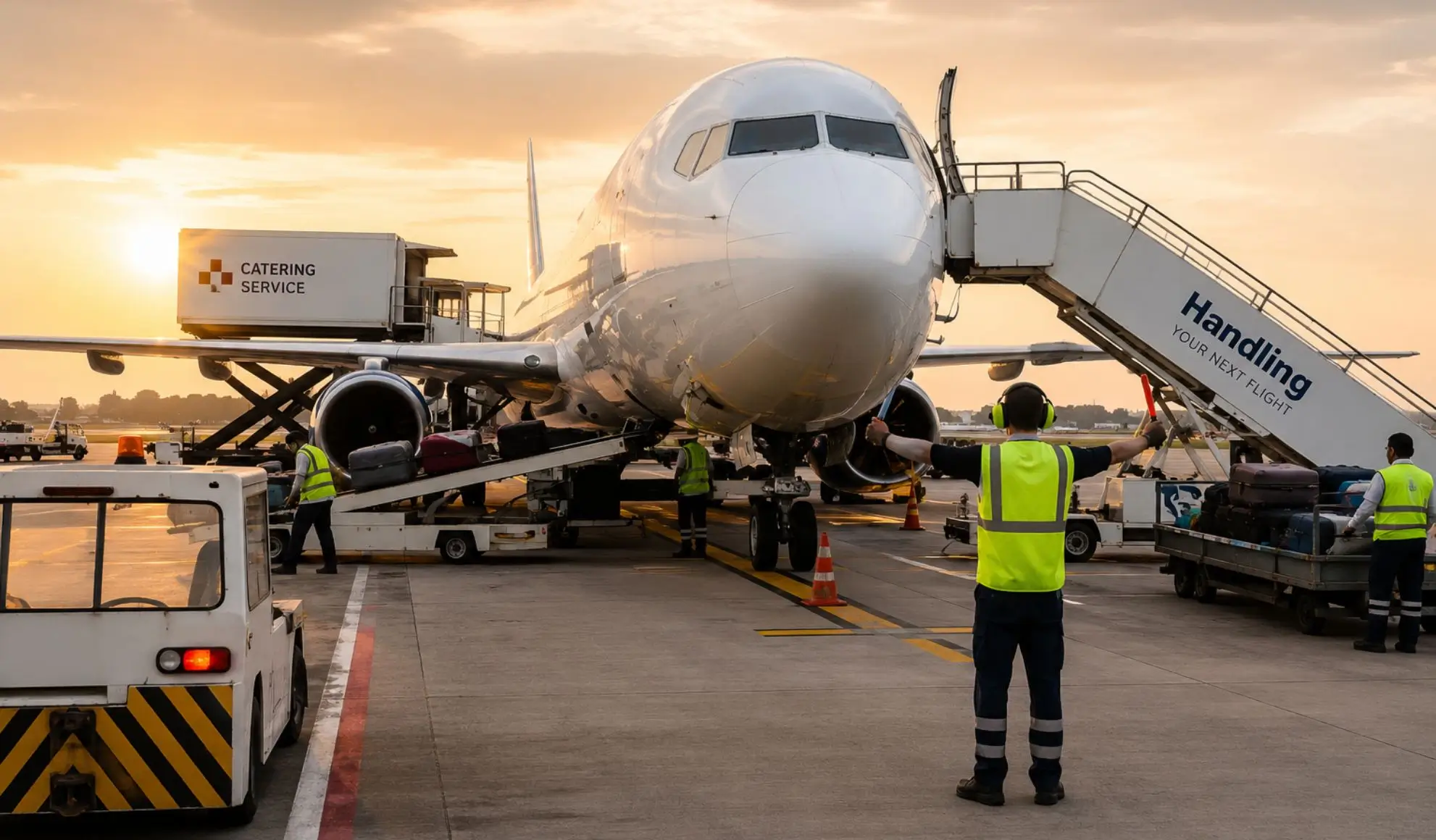
Ground handling is not something that should be left until the final days before departure. These services directly affect operational efficiency and the passengers’ overall perception of the journey.
On a charter flight, where schedules, services and passenger flows are designed around a specific group, ground assistance must be consistent with the overall flight plan.
A sports team travelling with oversized equipment, an incentive group requiring a customised welcome experience and a seasonal rotation carrying hundreds of passengers cannot be handled in the same way.
Organising a charter flight therefore also means determining in advance which ground handling services are required, who will provide them and how they need to be coordinated.
Flyness supports companies, agencies, sports clubs and Tour Operators in their communication with carriers and airport representatives, helping turn a complex operational process into a smooth travel experience.
Do you need to organise a charter flight and define ground services, passenger assistance, special baggage requirements or aircraft customisation in advance?
Contact Flyness to identify the most suitable solution for your group and the airports involved.